Tall tales of ghosts and legends accrue like mist to this old church tower in St. Helens. A whopper of an untold story features an A-List celebrity Roman resident.
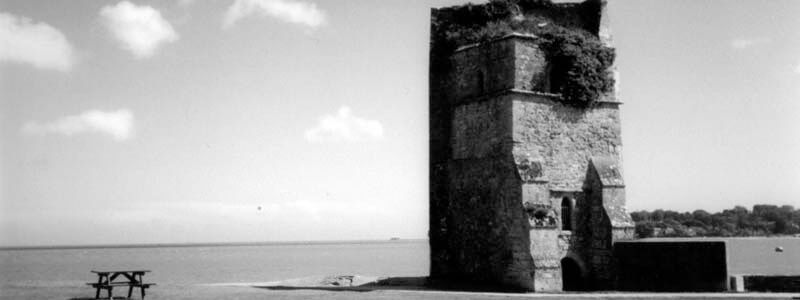
St. Helen's Tower
This lonely old tower was part of a church, not so long ago. Until the sea level rose and Portsmouth Royal Navy's deceased lost overboard floated up on the tide and in through the gaps. So a new church was built higher inland. Its tower left standing as a sea mark and icon for local legend-weavers.
Information on St. Helens dates back to a 12th century Cluniac priory, until 1414 when it and its possessions were claimed by the Crown. Henry VI bestowed its revenues to Eton college, in Windsor.
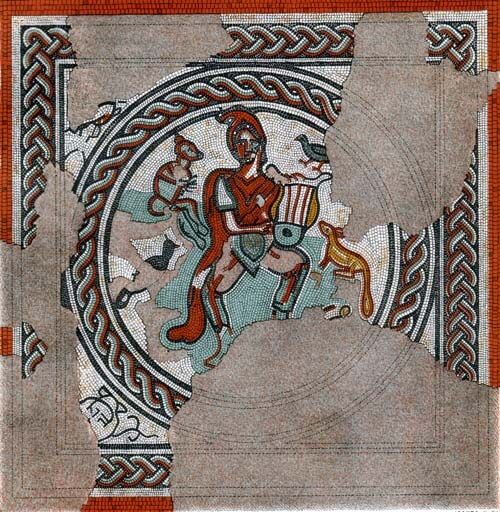
No one knows how and why St. Helen's is so named. Piece the facts together and a curious connection comes into focus.
St. Helens and the Roman Empire
Before the rise of Cowes, St. Helens was probably the Island's most important eastern port.
Navy sailors sometimes claimed the water from St. Helens spring was the purest in all this island. So pure it stayed sweet for a journey even as far as the Indian Ocean and back.
For many centuries foreign and British ships came here to take on board supplies from it and await favourable winds. Even as far back as Roman times.
Some late afternoons in the delicious cakery teashop on the Duver, latte hiss and gurgle interrupts detectorists' challenges at guessing how and why the town and tower gained its name.
As the latte hiss hushes, someone says too loudly "Named in honour of Flavia Julia Helena, mother of Roman Emperor Constantine the Great, who lived here on the Isle of Wight."
"No way!"
Some say the choice of dedication was not an arbitrary selection from the calendar of saints, but from its association with the mother of this emperor of Rome.
At the age of 72 Helena undertook a pilgrimage to the Holy Land. Christian tradition later credited her with discovering the True Cross beneath a temple dedicated to Aphrodite.
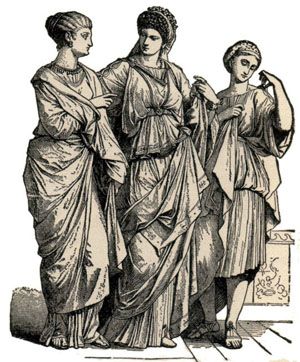
Some visitors ask if the magnificent Roman villa uncovered in nearby Morton was Vespasian's, the famous general who landed and took control of the Island in the name of Rome, in CE 43. Thirty-three years of age. He ruled as emperor for a time.
Historians dismiss this connection due to the fact Vespasian died in CE 79 and the villa is dated to the CE 200s.
The villa demonstrates that wealthy Roman occupation existed in the area.
However dedication of St. Helen is a possible link to Helen's son - Emperor Constantine the Great.
Constantine the Great
Born CE 274 (though some say 280) in the Roman province of Dacia (modern Yugoslavian town of Nis), Flavius Valerius Aurelius Constantinus reigned as Emperor from CE 306 until his death in 337.
Ghosts in Boats and an Emperor in Waiting
Brilliant and lucky general Constantius the Pale (Chlorus) was one of two Caesars appointed by Roman Emperor Diocletian in CE 286. Constantius' job was to govern Gaul (modern France) until he received orders to regain control of Britain for the Emperor, and suppress a rebellion taking place here.
An army and fleet loyal to the emperor was assembled under his command. Tradition places part of the rebel fleet in the Solent waters around the Isle of Wight, but a sea mist rose up and hid the incoming Roman fleet. They faded through like ghosts in invisible boats.
Constantius crushed the rebellion. Britain returned to Imperial rule.
Surprise happened. 305. The Emperor voluntarily abdicated, and Constantius was proclaimed co-emperor with General Galerius.
Fearing assassination by Galerius, son Constantine escaped to Gaul where his father planned a new mission to Britain, assembling an army and fleet. Ordered to fight the Pictish army that broke through Hadrian's Wall, causing mayhem in northern England.
Constantine joined his father, sailed for Britain. Constantius' mission succeeded, but he died that summer of 306, in York.
The Roman legions declared his son Constantine their leader.
After his father's troops declared him leader of the legions in Britain, he did not return to Rome. Constantine remained in Gaul and Britain for the next six years. Detectorists have a standing bet that Constantine came to the Island during those years to inspect the fleet restored to his command.
Historian Rohan Von Muller points out, Roman fleets cruised the channel and stationed themselves at the Isle of Wight.
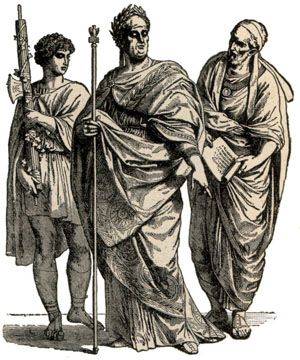
Constantine became the first Roman emperor to openly support Christianity and transformed its position within the Empire.
Did Constantine ever stand on the Duver and watch his fleet at anchor in the Solent? No document records such a visit; no inscription has been found. No historian can prove he came here.
Yet for six years Britain formed part of Constantine's world. Roman fleets operated through the Solent. St Helens bears the name of his mother. Nearby stands evidence of wealthy Roman occupation.
Coincidence, medieval devotion, or the fading memory of an imperial connection?
The Ghost in the Boat
Of course there is a ghost story to St. Helens.
Legend-sharing Abraham Elder in Tales and Legends of the Isle of Wight told of a ghostly encounter that happened to his friend Mr Rhino on arrival in the Island. Here to investigate its mysteries but didn't get far.
At that time, a small ferryboat operated between St Helens and Bembridge.
Elder reported on his friend's arrival and crazy bad luck.
"Mr Samuel Rhino, a person of considerable literary acquirements, started from London by the Portsmouth coach," says Elder. "To pay a visit to the Isle of Wight. His intention was to make a complete tour of the Island, to write a journal of his travels as he went along, as is the custom with literary people."
Mr Rhino and the Ferry Ghost
He arrived at Ryde late in the evening, but wanting to see the island's wonders and search out its legendary tales, he chose to start his tour there and then.
Took a cab to St. Helens, planned to cross by ferry to his hotel at Bembridge, and then on to Shanklin next morning. "Nothing worth mentioning occurred until he arrived at the ferry," continued Elder who next related the problem.
As he walked down to the boat, a tall man in black stepped in close beside him, walked along. No conversation but after twenty paces or so stopped at the water's lapping edge. Towering figure gestured to Mr Rhino to step first down into the boat.
"Mr Rhino, to show his breeding, bowed to the tall gentleman," continued storyteller Elder. The lanky stranger nodded, stepped in and took a seat. Mr Rhino sat beside him, and the boat pushed off.
For some time Samuel stared at the water, and the hills, and the red sky in the west. Turned to his long-legged neighbour, to tell him how beautiful the scene was, and make an observation about the weather...
Seat next to him was empty. Nobody in the boat but himself and the ferryman tugging at his oar. One of those saw-a-ghost freaky skin-shivering hairs on end moments happened for Mr Rhino, so Elder told.
What Happened to the Man in Black?
“What happened to the man that got into the boat with me?" asked Samuel Rhino.
“I don't know," answered the ferryman, with indifference.
“ Who was he?"
“Nobody knows," shrugged the oarsperson. "Every now and then he comes down of an evening, and takes a seat in the boat. But when he comes to about the middle of the stream, the moment you take your eyes off him he's gone, and without paying his fare, sir," complained the ferryperson. "I don't think he’s an honest person."
In the morning Mr Rhino, instead of continuing his tour, packed up his portmanteau and returned to London.
Ghosts can really spoil a day.
Did an emperor of Rome ever step aboard a boat on the waves of St Helens? Like the ferryman's mysterious passenger, the answer slips away whenever we think we have caught sight of it.
 Nick Hammond
 Nick Hammond