Do communities create ghost stories to preserve memories of danger?
The Clarendon Ghost Girl
A ghostly apparition of a young woman is sometimes seen drifting through the village of Chale below Blackgang on the Isle of Wight, then wafting on down to the sea.
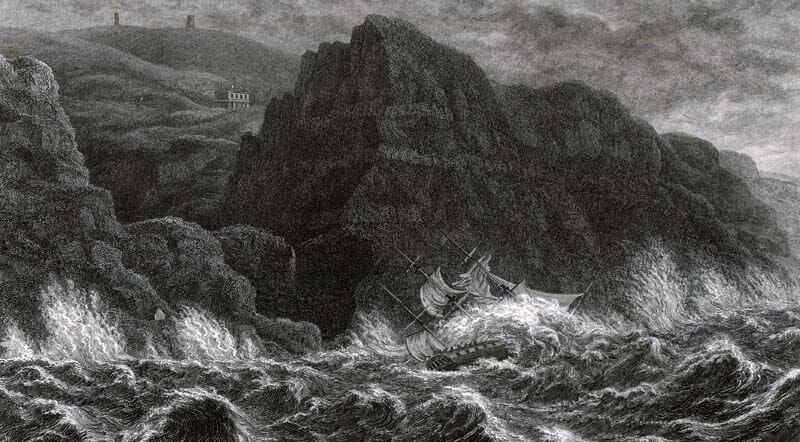
Residents believe her to be a ghost from a famous shipwreck of 1836; a tragedy in which all passengers were lost.
A 345-ton ship built for trading in the West Indies the SV Clarendon sailed from St. Kitts bound for Portsmouth. Until the morning of 11th October when a raging storm smashed her onto the shore below Blackgang.
Bodies were recovered along the beach; Lieutenant Shore, his wife and four daughters were buried in Newport cemetery.
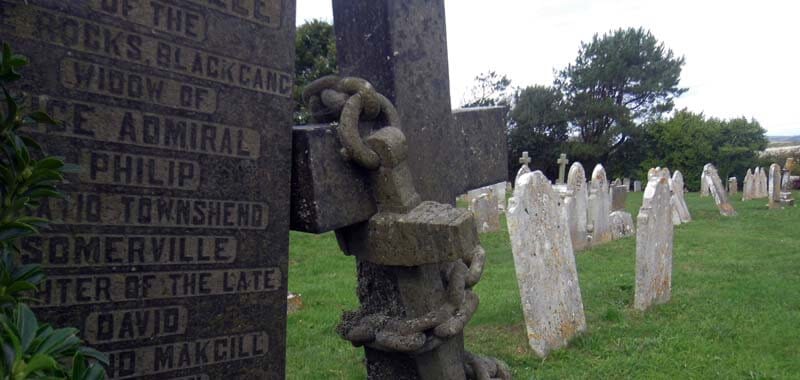
Everyone else received burial in Chale churchyard. Captain Walker and his lost crew-members; two plantation owners, Sheppard and Walter Pemberton of St. Kitts, and his daughter.
Miss Gourlay is Missing
A missing body mystery remained. Of Miss Gourlay, daughter of Captain Gourlay of Southsea, there was no trace; until weeks later, she was found in an unexpected place, as Island historian Davenport Adams reported:
‘I relate a true but affecting circumstance. The corpse of Miss Gourlay was borne away by the waters, and actually cast ashore at Southsea, opposite her father’s residence.’
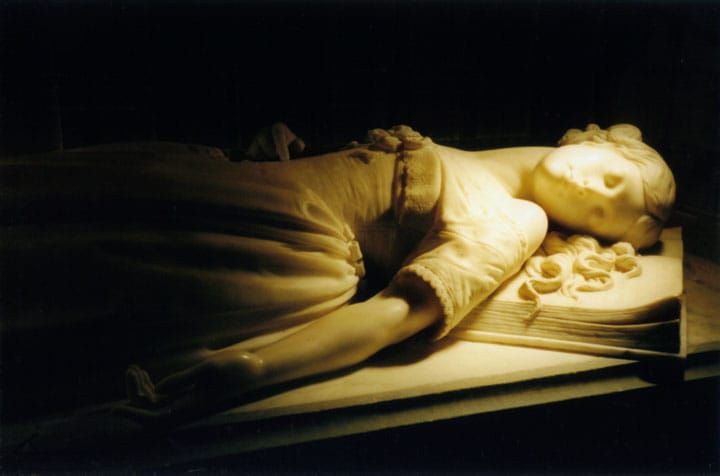
Those who have seen the ghost of Chale describe a misty figure of a well-dressed young woman, and so believe it to be the lost spirit of Captain Gourlay’s daughter.
Maritime ghost stories differ from many inland hauntings. The dead often were never recovered, never properly mourned, or disappeared without witnesses.
In such circumstances communities create stories that symbolically return the lost home. The ghost becomes a form of remembrance. Miss Gourlay's body really did return to her family.
Perhaps that is why her story survived when so many others were forgotten.
Of Smugglers & Shipwreck
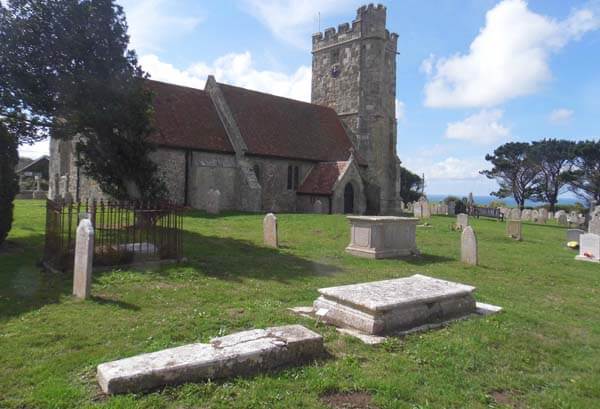
Chale village's few buildings cluster half a mile either side of a country road that leads to a junction by the old church of St. Andrew where the graves of those lost from the Clarendon can still be found.
During misty nights, when the old lighthouse tower of St Mary's up on the hill was invisible, a lantern was lit in the church tower to warn shipping. For this purpose the tower was taller, serving as a beacon stage useful for sea captains and smugglers.
The Isle of Wight’s paranormal folklore surrounding shipwreck and smuggling is among the darkest and oldest on the Island because it emerged directly from real fear of death at sea due to violent weather.
Unlike many manor-house ghost stories created later for entertainment, these legends developed within working coastal communities where people genuinely disappeared beneath waves, vanished into fog, or perished in clandestine violence.
From a folkloric perspective, the Island’s southern and western coasts became liminal zones, dangerous edges between civilisation and the unknown.
The sea was not romantic to earlier generations; it was unpredictable, economically vital, and frequently lethal. That emotional reality shaped the ghost traditions that survive today.
Flotsam, Jetsom & Lagan
Many people associate the name Blackgang with an especially nasty gang of wreckers but according to historian Mills it is an Island term for a "dark path or track".
But smugglers there were here. In his brilliantly definitive guide: 'Smugglers of the Isle of Wight' the late but great Richard J. Hutchings eloquently explains Flotsam, Jetsam and Lagan for those of us who do not know the difference.
In mitigation for whatever misdeeds the smuggling communities may have done, Hutchings suggests that these should be seen in a philosophical light because the Islanders suffered so badly from the passengers who arrived on invasion ships that it seemed only fair recompense, that if they had the chance, they should benefit from the contents of their latest rulers' ships that washed ashore off shipwrecks along the coast.
They were flotsam or jetsam and belonged to no one.
The problem was that some said the ships were in no trouble until they saw the wreckers' lanterns and some survivors should not be dead and would have lived had not some one dropped a barrel on a skull.
Hutchings spells it out: what sank was jetsam, what floated was flotsam and whatever washed up along the shore was "wreck".
And then there was Lagan: this was content that ought to be flotsam, but was jetsam on account that someone had sunk it deliberately and would return for it later.
However, all this was irrelevant if anyone survived.
Then the King's Law applied, but there are many historians who suspect that some dark souls were tempted to make certain that no one lived. Unless a deal was struck, like that with the Captain of the St Mary de Bayonne, which resulted in the construction of St Catherine's light house and oratory.
The Wrecker's Curse
Among the darkest traditions are the stories of “wreckers.”
According to folklore, some coastal communities deliberately lured ships onto rocks during storms using false lights so cargo could be plundered afterward.
Historians debate how widespread deliberate wrecking truly was, but the belief became deeply rooted in British coastal folklore, though there is no actual evidence such misdirection happened on the Isle of Wight.
Nonetheless on the Isle of Wight, tales emerged of phantom lanterns moving along cliff tops; mysterious lights appearing during fog, and ghostly figures carrying lamps near dangerous coves.
One especially grim belief held that hearing voices calling from the cliffs at night meant drowned sailors were trying to lure the living toward death.
The emotional horror behind the legends is important: people naturally feared storms, but worse was the human greed exploiting catastrophe.
 Nick Hammond
Phantom Lanterns
Coastal villages along the southern UK coast preserved traditions of “lantern men”, spectral smugglers or wreckers seen carrying swinging lights along old cliff paths.
Witnesses supposedly described silent figures walking impossible routes along dangerous edges; lanterns moving where no path existed, Or lights vanishing suddenly over the sea.
In folklore, these apparitions often symbolised souls trapped by guilt or violent death.
Some versions suggest the lantern men were smugglers murdered by rivals or betrayed to customs officers.
The image of wandering lights became especially powerful because real smugglers genuinely used concealed lantern signals to guide boats ashore.
Smuggler Tunnels & Haunted Caves
Isle of Wight villages also developed stories about hidden tunnels connecting inns, churches, manor houses, and the coast.
Whether real or exaggerated, these tales became fertile ground for ghost folklore. Particularly haunted locations were concealed cellars, sea caves, and blocked underground passages.
Legends described whispers underground, or the sound of ghostly chains dragging through tunnels; and smugglers appearing briefly before disappearing into walls.
One recurring motif involved a murdered informer buried secretly within a tunnel system whose spirit could not rest.
The psychological effect of cramped underground spaces almost certainly contributed to these traditions.
The Lost Sailors
This southern coastline was feared for centuries because of its hidden ledges and unpredictable currents; and worse, the terror of sudden storms and violent seas.
As a result, local folklore became saturated with ghost stories involving drowned sailors knocking at cottage doors; and phantom cries heard from the surf. And spectral figures, like the ghost girl of Chale drifting through the village dripping seawater.
Some stories described sailors appearing briefly before a family learned of a shipwreck, a classic form of “crisis apparition” common in maritime folklore worldwide.
In isolated coastal communities, where news travelled slowly, such experiences felt deeply real.
The Smugglers Inn
Old inns in this part of the Island accumulated stories involving smuggling gangs and hauntings. Legends of contraband and secret meetings; deadly betrayals that led to drastic end-of-life scenarios.
Ghost traditions attached to these inns were darkened by heavy footsteps and shadowy figures in tricorn hats. The mixture of alcohol, oral storytelling, and dangerous criminal activity naturally encouraged mythmaking.
Blackgang Chine
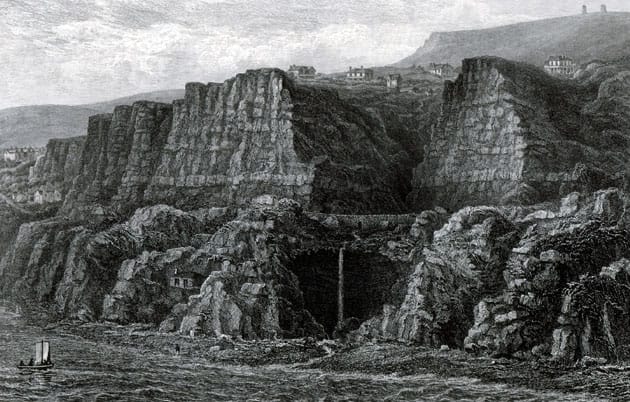
Before Victorian tourism transformed it into a curiosity attraction, Blackgang Chine had a genuinely sinister reputation.
The constantly collapsing cliffs created an impression that the landscape was unstable and hungry. Stories described people disappearing in fog; some claim to have heard voices from below the chine after storms.
Because the coastline physically eroded before people’s eyes, locals often imagined it as spiritually dangerous as well.
Paranormal Echoes of Smuggling Violence
Smuggling was not romantic in reality. Gangs could be brutal. Informers were beaten; rivalries often were settled violently. Customs officers were attacked, and bodies hidden.
Some ghost legends preserve traces of this darker truth. Stories of headless riders, and bloodstains reappearing in old storage buildings.
Folklorically, violent hidden crime frequently produces haunting traditions because communities cannot openly discuss the real events.
Ghost stories become encoded memory.
The Power of Maritime Folklore
Shipwreck and smuggling legends endure because they reflect primal human fears of drowning and disappearance. They also come from very human experiences of isolation and betrayal.
The Island’s geography intensifies all of this, being susceptible to sea fog, collapsing cliffs and violent weather. Plus all the hidden coves, and long stretches of isolated coast.
Even today, certain areas of the Isle of Wight can feel eerily detached from ordinary time during storms or mist.
Modern ghost investigators continue exploring the Island's cliff paths and abandoned coastal buildings; braving its hidden coves, caves and old inns associated with smuggling lore.
Technology has changed, powerful cameras and sound recorders now add new dimensions to much older oral traditions. Yet the emotional core remains ancient:
the fear that the sea remembers its dead.
From a folkloric perspective, Isle of Wight maritime hauntings are ultimately about unresolved loss, sailors never recovered, wrecks swallowed by storms, smugglers betrayed in darkness, and communities living beside a sea capable of erasing lives without trace.
And miraculously delivering their corpses home, like lost Miss Gourlay.
The sea may have returned Miss Gourlay's body to her family. Whether it also returned her story is a question explored elsewhere in the archive.
 Nick Hammond