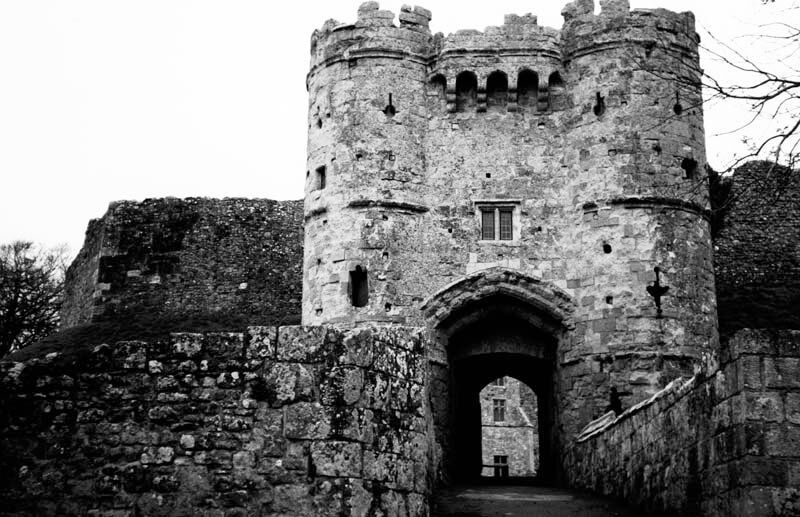
Do people impress memory into their surrounding landscapes through the telling of stories and the building of monuments? Ghost stories are among the most enduring ways memories survive.
The Isle of Not Forgetting
Why do places seem to remember things long after they have been forgotten? Some places seem unable to let the past disappear. Generation after generation people carry the same stories, the same place names, the same dialect and rituals.
Carisbrooke Castle is perhaps the Island's most famous landmark monument of remembrance.
In 1647 the King of England, Charles I was imprisoned within its walls. He made two desperate attempts to escape before being taken to London where he was executed. Island tradition says Charles never entirely left the building.
Witnesses have occasionally reported seeing a lonely figure walking the battlements.
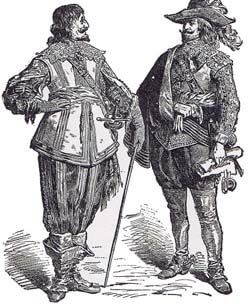
Whether ghost or folklore, the story has become another way the castle remembers its royal prisoner.
A castle cannot remember a king, it cannot think; any more than a ruined abbey can remember a funeral. Places have no minds, they possess no memory of their own. So what exactly are we encountering when history seems to refuse to disappear?
Places do not literally remember, but maybe we remember through them.
Why Are Some Places Special?
Human beings have always sensed that some places feel different. Long before historians recorded the dates of what happened when, people returned repeatedly to the same Isle of Wight hilltops to bury their dead and raise monuments.
They revisited its sacred places to build temples and churches. Later generations often forgot why those places first became important, yet continued to treat them differently. Every civilisation inherits a landscape already shaped by someone else's memories and hopes.
The Isle of Wight is such a landscape. For thousands of years people have lived here and worshipped many different gods. They created rituals, fought, celebrated, mourned and buried their dead here. Every generation believed it was building something that would endure.
History follows laws of its own, yet maybe they were only partly mistaken.
The Things We Expect to Last
When Baldwin de Redvers founded Quarr Abbey in 1132 he probably imagined its prayers would continue to the end of time. When the Worsleys built Appuldrcombe House they expected their family's greatness to remain visible for centuries.
Queen Victoria believed Osborne House would preserve the private world she had shared with Prince Albert. Alfred Tennyson's admirers raised a granite monument that still watches over the western downs.
Each generation chose a different monument, each believed it had found a way of defeating time. Abbeys became ruins; great houses collapsed; empires have dissolved. Families have long disappeared; even monuments are weathering.
But sometimes something unexpected survives.
Not always a building, not always a name. A story survives.
A ghost walking the battlements of Carisbrooke Castle. A phantom coach at Knighton Gorges. A bonnet-wearing woman in Newport Church Litten park. Brown-robed monks carrying a white-flowered coffin through the ruins of Quarr Abbey.
Whether these experiences represent misunderstood natural events, psychological phenomena, folklore, coincidence or something genuinely unexplained remains an open question.
Some stories have travelled through centuries; others were recorded by identifiable individuals only decades ago. Some may eventually find ordinary explanations. Others continue to resist them.
Whether every story happened exactly as remembered matters less than why it continues to be remembered.
Is Landscape an Archive?
The County Archives department in Newport preserves our memories in documents. The Island's archaeologists preserve them in objects.
The Wight landscape preserves memory differently.
A churchyard retains the outline of forgotten graves long after the names have weathered away. A ruined window frames the same view that medieval monks once saw.
Places become archives, written not with ink but with continuity. Every generation adds another layer. None completely erases those that came before.
Millions of people have lived on the Isle of Wight. Almost all have vanished without trace. We know the names of Baldwin de Redvers, Richard Worsley, Queen Victoria and Alfred Tennyson.
We know almost nothing about the mason who carved Quarr Abbey's arches. Or the apprentice who tended the abbey's herb garden; or the child who carried water to its builders. Sometimes history remembers kings, sometimes it remembers poets. Sometimes it remembers nobody except a ghost.
Remembrance may be less predictable than we imagine.
Ghosts as Memory
Ghost stories are often treated as entertainment. Maybe they are something else. Many seem to gather around moments of profound human significance. Whether the apparition exists independently of the witness is an open question.
What cannot be denied is that these stories preserve what successive generations believed mattered enough to remember about places long after their physical history has faded.
The ghost becomes another way of remembering.
History is incomplete. Documents are lost, buildings fall, memories fade, folklore changes. Even archaeology recovers only fragments. The unexplained belongs within that landscape of uncertainty.
It is another piece of humanity's attempt to understand its own past.
What Deserves to be Remembered?
This may be the oldest question of all.
Remembrance has never belonged entirely to kings or historians. It belongs equally to ordinary people who continue telling stories.
Nothing survives exactly as intended, but very little disappears completely.
The past is not finished with us. It lingers in buildings and landscapes; in stories and sometimes in the testimony of those who believe they have glimpsed something beyond ordinary explanation.
Every story in this archive asks the same question: what has this place remembered?
Whether the answer is history, folklore archaeology or something stranger, each reminds us that forgetting is rarely complete.
Places do not remember. We remember through them.