Isle of Wight Ghosts
The Isle of Wight has always felt slightly separate from the mainland. Geographically of course, but also psychologically. Ghosts and supernatural folklore on the Isle of Wight are part of the island’s shared memory.
Folklore, Séance, Investigation and the Digital Supernatural
An island creates boundaries naturally. It is surrounded by sea; dressed in quick-changing weather and drifting mist. Ancient footpaths vanish into woodland and downs across the Isle of Wight.
Roman villas lie beneath its fields. Smugglers crossed its dark shorelines beneath moonlight. Shipwrecks scattered themselves across its dangerous coastal waters.
Its castle imprisoned a king of England. Its abbey prayed against plague and storm. Across centuries, people arriving on the island brought with them their own beliefs and religions, shared their grief and stories.
A pair of stone gateposts is all that remains of some beloved but sadly cursed great houses, like Knighton Gorges.
Stories rarely leave an island completely.
The Isle of Ghosts
Ghosts and supernatural folklore reaches deeper than entertainment. They are ways successive generations explained why, when bad things happened. And how sometimes things work out by strange coincidence.
And the uneasy feeling that certain places remain occupied by more than the living.
Long before paranormal investigation became organised, island folklore already preserved a world alive with strange presences.
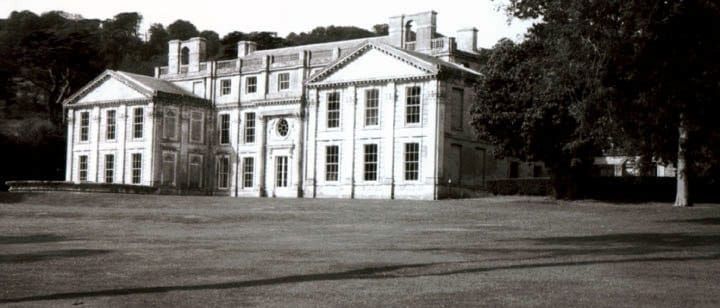
Phantom monks were said to roam the pathways around old Appuldurcombe House in Wroxall, drifting through doorways from long ago. Way back into medieval times when the Island was ruled by Norman barons.
Phantom coaches appear upon lonely roads, in Knighton one is often seen passing between stone gateposts.
Processions cross the old burial ground in Quarr abbey, sometimes seen carrying a coffin strewn with white flowers.
Smugglers’ coves have accumulated tall tales of restless dead and hidden treasure, and in Niton, a lost port, which folklore claims the Holy Grail stayed for a night or two.
In Nunwell House, in Brading a hunted king of England stayed the night and may have begged for help. Its rooms are said to host an older ghost, back from Elizabethan times. A tearful grey lady nightly roams its rooms and slaps its sleeping family and guests.
An ancient burial site and prehistoric monument, the Longstone has for several thousand years inspired stories linking to forgotten ritual and lingering spiritual power. And druids.
 Nick Hammond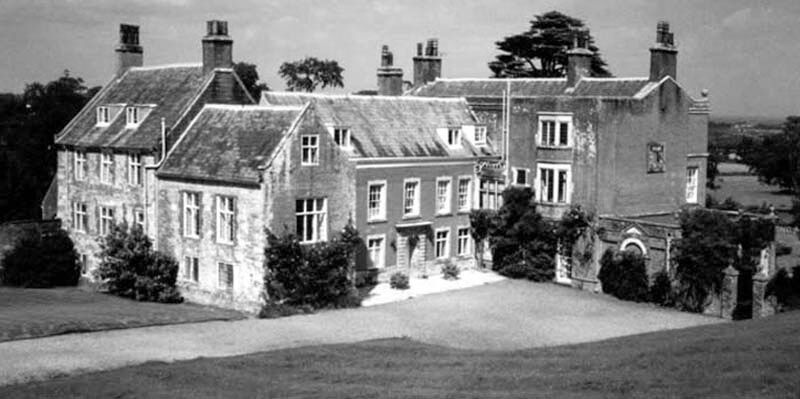
A Brief History of Isle of Wight Ghosts
Such traditions emerged naturally from our distant parents' communities in which the boundary between visible and invisible worlds felt more two-way than modern life allows.
To earlier generations, ghosts were not necessarily shocking. Death remained physically present in daily existence. Families cared for the dying at home. Funerals moved openly through villages.
Churches, graveyards and folklore existed together within a continuous worldview.
The supernatural was threaded into ordinary life because uncertainty itself was present in life's fabric. Storms, shipwreck, war and childbirth constantly reminded people how fragile human existence truly was.
By the 19th century, attitudes toward the supernatural began changing. New technologies emerged from industrialisation and scientific progress; new mediums such as photography and telegraphy transformed how people understood reality.
Paradoxically, this age of rationalism also produced an extraordinary fascination with spiritualism. Victorian Britain became obsessed with communication beyond death.
Nick Hammond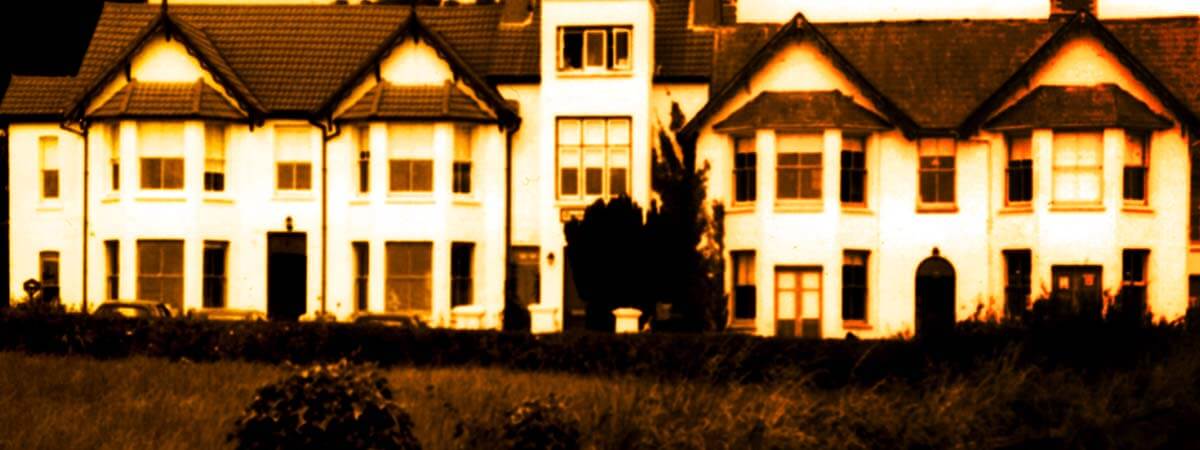
Is There Anybody There? Who Tapped the Table?
Séances attracted a wide audience; table-turning and mediums flourished across the UK. Spirit photography and automatic writing gained attention of both the vulnerable and the learned; even scientists.
Victorians approached spiritualism experimentally. Superstition was not replacing reason. More information was available thanks to technology and innovation.
If invisible electromagnetic forces such as radio waves could exist undetected until technology revealed them, perhaps consciousness itself might survive bodily death in forms not yet understood.
The Isle of Wight became part of this great debate, and for a time it was the dreaming head of the British Empire.
As a retreat for creatives, clergy, and wealthy Victorians, the island absorbed the era’s fascination with mortality and the unseen world. Most notably in the house and grounds of Farringford House in west Wight, home of poet laureate Alfred Lord Tennyson.
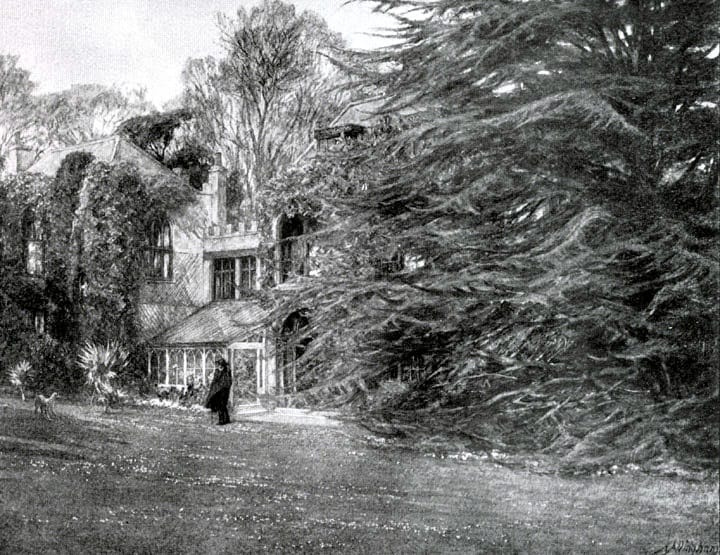
Is Alfred Out There, Still?
Gothic storytelling flourished in that period, and so did debate on genuine spiritual inquiry. The Royal Society missioned Sir William Crookes to go test the facts of séance.
In the pre-TV age Isle of Wight communities, as everywhere else, nights were long. Candlelit parlours hosted séances. Mediums travelled through towns and private houses; some stayed on the Isle of Wight on holiday and business.
Alfred composed poetry: told the ancient legend of King Arthur; and islanders told stories of a tin route out from Puckaster, dating back beyond the time of Jesus, as distant as the Bronze Age and construction of the pyramids.
Island legends merged with new ideas about psychic research and communication with the dead.
Ghosts & the Age of Investigation
Victorian ghost culture differed from our modern paranormal entertainment. During the time of the Tennysons, it carried emotional seriousness.
Many participants in séances sought comfort after bereavement, particularly in an age when child mortality remained devastatingly common.
Others genuinely believed science might eventually explain apparitional experiences and survival after death.
Ghosts became questions, not monsters. And those questions only deepened during the 20th century.
Wars profoundly transformed the psychology of haunting.
After the industrial slaughter of the First and Second World Wars, millions grieved people whose bodies were missing, unidentified, or buried far from home.
Spiritualism surged again because traditional religious certainty struggled to absorb such scale of loss. Across Britain, including the Isle of Wight, stories of apparitions, premonitions, and unexplained experiences multiplied within communities carrying collective trauma.
At the same time, paranormal investigation began changing.
Earlier folklore accepted ghosts as part of cultural reality. Victorian spiritualists attempted communication through ritual and mediumship.
Twentieth-century investigators increasingly approached hauntings with technology and data, and devices for recording audio and measuring environmental factors.
New technologies offered access to databases for historical research.
The supernatural entered the age of investigation.
Gay Baldwin's Isle of Wight Ghost Books
On the Isle of Wight, one of the most influential modern figures associated with this transition was Gay Baldwin.
Through investigations, books, lectures, media appearances, and public engagement, Baldwin helped popularise the island’s ghost traditions for contemporary audiences.
Her work emerged during a period when paranormal investigation was becoming popular in the media.
Ghost stories moved beyond local oral tradition into books and magazines, radio and TV, and popular public events like the Ghost Walks.
The island itself became understood as a paranormal landscape. Ghost Island.
Investigations became a little bit of lots of things. Part historical preservation, part entertainment, part philosophical inquiry. Yet something else was happening simultaneously.
Technology was transforming belief.

Into the 21st Century
For most of history, ghost stories spread slowly through conversation and family tradition. Our grandparents’ tall tales told beside fireplaces. People read books, or shared local folklore stories.
Modern digital culture altered this completely.
Younger generations encountered the paranormal first through TikTok clips and livestreamed ghost hunts. Or Reddit discussions, podcasts, and algorithm-driven media feeds.
The supernatural has become globalised.
Anyone of any age on the Isle of Wight can now compare a local ghost story instantly with reports from abandoned hospitals in America, Japanese urban legends, Scandinavian folklore, or paranormal investigations inside Eastern European castles.
Information moves faster than ever before.
So do interpretations. This creates a cultural shift.
Do We Believe More or Less in Ghosts?
Earlier generations often inherited ghost beliefs through the community, as it had done for centuries. Modern young people on the Isle of Wight instead construct beliefs collaboratively across digital networks.
Online culture allows paranormal experiences to be shared, analysed and debated. And mocked, or reframed in real time.
Scepticism and belief coexist constantly within the same conversation.
One person posts a strange photograph. Thousands immediately investigate it.
The result is a different relationship with uncertainty. Not necessarily less belief in ghosts.
Generations of us raised online tend to move fluidly between multiple states of response: every kind of spectrum in irony, curiosity and scepticism. Interpreting information through filters as diverse as science fiction to horror aesthetics, and even, in some cases, genuine existential questioning.
A haunted location may simultaneously function as entertainment content, historical interest and emotional expression.
And also function as a social bonding experience.
Modern paranormal culture is fragmented but intensely creative.
The Here and There of Life
Digital culture has also revived interest in place-based mystery, at precisely the moment modern life often feels detached from place altogether.
People surrounded by virtual environments remain profoundly attracted to abandoned buildings and ancient ruins.
Ghosts get people out. Reconnect abstract digital existence with atmosphere, place and storytelling; and ironically, reality. A livestream from a haunted ruin still depends upon the ruin.
An apparition still belongs somewhere.
Who's Afraid of Ghost Island?
This may explain why the Isle of Wight continues holding unusual fascination. Despite modern technology, the Island retains older atmospheres and continuity difficult to reproduce artificially.
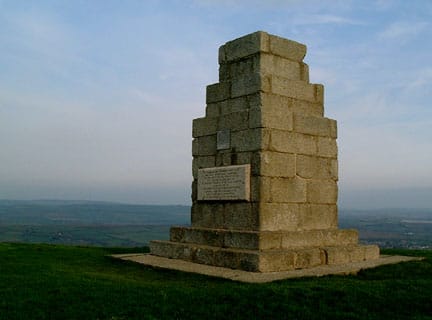
Ancient churches remain active beside prehistoric monuments. Sea mist still obscures the old light tower on St Catherine's Hill. Ruined houses decay quietly beneath trees.
History remains physically present.
And physical presence matters to paranormal imagination.
Ultimately, humanity is rational but ghost stories endure because haunting addresses questions reason alone cannot fully answer. We probably always will ask: What remains after death?
Can places remember human experience? Do moments of extreme emotion persist somehow within environments?
Whole constellations of questions open up.
Why do some places feel psychologically charged?
The Isle of Wight offers no final answers to these questions, but it is a Jurassic landscape where they continue unfolding generation after generation, from prehistoric folklore to Victorian séance rooms, from 20th-century investigators to digitally connected audiences exploring haunted locations through phones glowing in the dark.
Methods change. Technologies change.
But the fascination remains constant.
Because beneath every ghost story lies the same enduring human intuition:
Reality may contain more memory, more awareness and more mystery than the modern world comfortably admits.
Continue Exploring
Time Anomalies
What if some hauntings are not ghosts but intersections with the past?
British Ghost Cases
Why Britain became the world's greatest storyteller of ghosts.
Unsolved Mysteries
Ancient monuments, lost meanings and the power of wonder.
The Margo Williams Archive
Investigations into survival, hauntings and the possibility of life after death.