Unsolved Mysteries
Is mystery just a failure of knowledge, or something primal and quite satisfying in knowing that not everything can be explained?
Why the Unknown Still Calls to Us
Among the Isle of Wight's quieter mysteries is the tragedy that unfolded inside Newport's Old Grammar School during the final months of King Charles I's reign.
Here, during the Treaty of Newport politicians believed they were negotiating peace while events elsewhere were already overtaking them. When the negotiations ended the king was removed from the Island forever.
One question has never entirely disappeared.
Did Charles refuse his last opportunity to escape? Or did events simply close around him faster than anyone realised?
Sir Richard Worsley believed the king chose to remain. Other historians are less certain. We shall probably never know.
It is a small mystery. But it introduces a much larger question.
Not All Mysteries are Equal
Some mysteries ask what happened yesterday. Others ask what happened three thousand years ago. Some ask how the universe works.
People seem instinctively drawn toward unsolved mysteries. Their scale changes, our curiosity does not.
The Isle of Wight's oldest surviving mystery may stand quietly upon the windswept chalk landscape above Mottistone village: the Longstone.
Two great megalithic stones remain from a prehistoric monument erected thousands of years ago by people whose names, language, beliefs and rituals are now almost entirely lost to us.
Small constellations of mysteries cluster around the Island's ancient churches and castle; and among its broken mansions. Perhaps the strangest mystery is associated with Newport's old Sun Inn building at the corner of Holyrood St. A hidden room was found containing a pillbox hat, a bag of single shoes and a bloodstained nightdress hidden behind a fireplace.
 Nick Hammond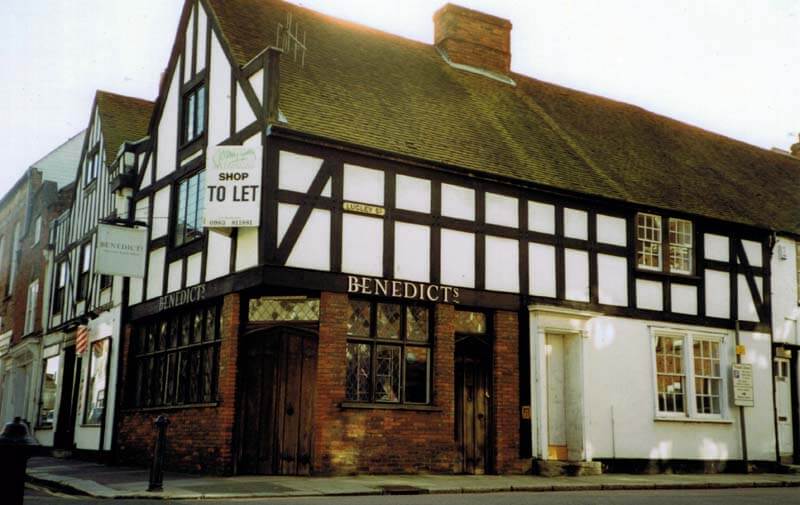
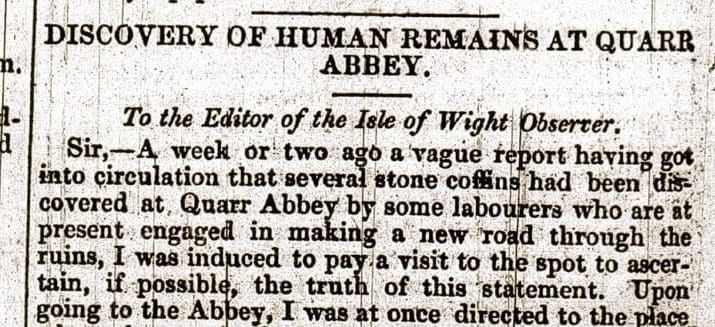
Among the most poignant medieval mysteries is the discovery of human remains during the excavation of a road through Quarr abbey.
There are Roman mysteries: who lived in the villa discovered in Brading and why is the Island's oldest port named after St Helen?
And the Victorian mystery of exactly how the corpse of a drowned girl made it home safe through the sea all the way to her Portsea home from shipwreck off Blackngang Chine.
Unsolved mysteries occupy a threshold between knowledge and imagination; between the science of forensics and folklore, and somewhere along the spectrum of history and myth.
Mysteries remind us that knowledge has a horizon beyond which certainty fades.
Science Lives Alongside Enormous Mysteries
Few of us stop to consider the scale of the mysteries confronting modern science. Dark Matter and Dark Energy appear to dominate the universe, yet no one knows exactly what they are.
The origin of life has occupied scientists and philosophers for thousands of years. Time itself remains surprisingly mysterious. Even gravity, perhaps the most familiar force in everyday life, still raises profound questions.
And there are existential mysteries: Why are we here?
Why are humans moved by beauty?
Does our consciousness survive death?
Is time fundamental?
Can memory exist outside minds?
These are genuinely unsolved mysteries.
 Nick Hammond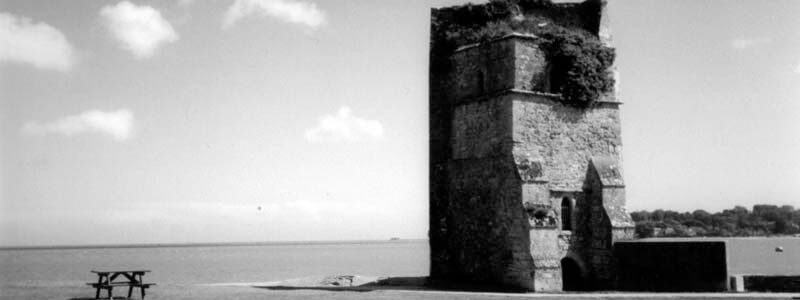
Living With Uncertainty
History preserves facts. Science explains mechanisms. Mystery preserves questions.
Modern society often assumes uncertainty is uncomfortable and should be eliminated. Psychologically, people are drawn toward answers but wonder is just as attractive.
As children instinctively we explore hidden places and ask impossible questions. The myths and stories our parents told long ago proved they possessed knowledge. But they also possessed wisdom.
Stories are told because they, as we all do today, need to find meaning in the presence of uncertainty.
Maybe mystery stimulates imagination precisely because it remains incomplete.
Stonehenge and Avebury are among the most enduring mysteries. No one knows who built them and why, but that's precisely what makes them so worthy of wonder. They stand as reminders that human civilisation extends far beyond written history and modern rational certainty.
Those who built them possessed knowledge, beliefs and symbolic worlds now mostly inaccessible to us. The stones remain. Meaning is lost, and into that void imagination flows.
It may be true to say that without mystery, our world is less, emotionally. That an entirely solved reality may feel spiritually empty.
Truth is desirable; ignorance is not preferable. But wonder is essential to human experience. The greatest scientific discoveries frequently begin with astonishment.
The largest questions resist simple answers, and unsolved mysteries preserve them against the flattening force of overconfidence.
Nick Hammond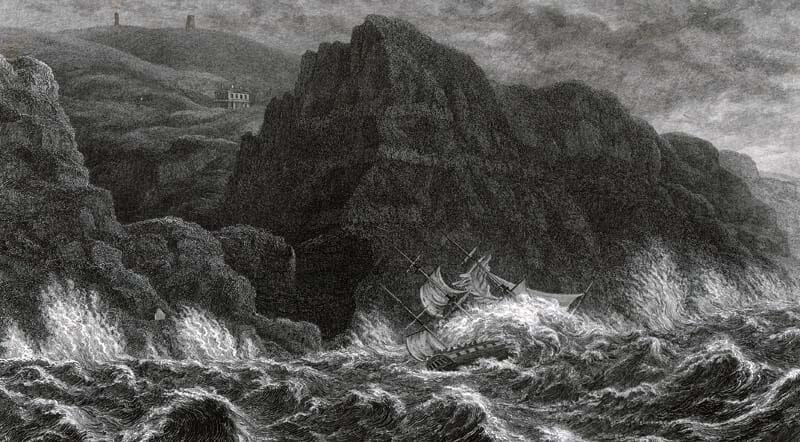
Will We Ever Solve Every Mystery?
This may explain why modern audiences remain fascinated by paranormal phenomena despite scientific scepticism.
Ghost stories and time anomalies; like folklore and unexplained experiences all occupy the same psychological territory as ancient monuments: they challenge assumptions about the limits of reality.
Even those who doubt them remain captivated by them. Mystery has a magic, an emotional gravity.
The best are rarely frightening at face value. Their power is in destabilising, reminding us how the world can be stranger, deeper and far more minestronied than ordinary life permits us to notice.
Old sites and buildings seem to produce this sensation of mystery because they preserve continuity across immense stretches of time.
A prehistoric monument. A ruined abbey. A haunted palace corridor.
A funeral procession glimpsed in moonlight. A fire burning in a vanished room.
A scream still echoing through history.
All point toward the same unsettling possibility: that some aspects of human experience may not disappear as completely as we imagine.
The Value of Wonder in a Post-Truth World
Is this why unsolved mysteries endure for centuries in our cultures?
Even in an age of satellites and algorithms, of scientific mastery, ancient stone circles still disturb us. Haunted rooms still fascinate us. Folklore survives.
Is it just because we humans are foolish? Or because mystery answers a deep emotional need modern life often neglects: the need to feel wonder in the presence of existence.
The Longstone at Mottistone has stood for thousands of years watching generations pass beneath changing skies. Empires rose and vanished. Religions transformed. Languages evolved. Yet the stones remain silent.
Nick Hammond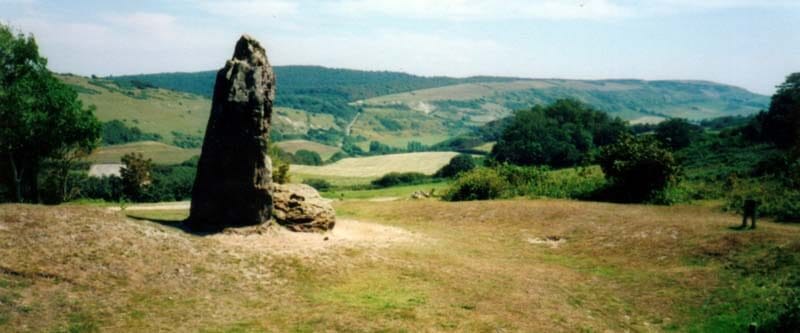
And in that silence lives the oldest unsolved mystery of all: our continuous search for answers is the quest for meaning within the unknown.
It makes us ask questions. Like why would a king surrounded by an island of a thousand boats, let himself be taken by a deadly enemy?
The Magic of Mystery
The mystery surrounding Charles I's final hours on the Isle of Wight will probably never be resolved. Somewhere between the walls of Carisbrooke Castle and the negotiations in Newport, certainty disappeared.
History often ends that way. Perhaps certainty is not always the purpose. Every mystery invites us to think more carefully than we otherwise would.
Some last a generation. Others survive for thousands of years. The greatest mysteries may never be solved at all.
What is consciousness?
Why does mathematics describe the universe?
Why is there something rather than nothing?
Do ghosts exist?
Does love survive death?
Questions like these are not failures of knowledge. They are reminders that knowledge has a horizon. Every generation walks towards it.
Every generation discovers another horizon beyond.
Continue Exploring
Time Anomalies
What if some hauntings are not ghosts but intersections with the past?
Isle of Wight Ghosts
The island's folklore, séances, investigations and haunted locations.
British Ghost Cases
Why Britain became the world's greatest storyteller of ghosts.
The Margo Williams Archive
Investigations into survival, hauntings and the possibility of life after death.