Time Anomalies
"Ghost" is too small a word to describe some encounters, big sightings include entire houses and Georgian carriages. Is that a ghost or a glitch in time?
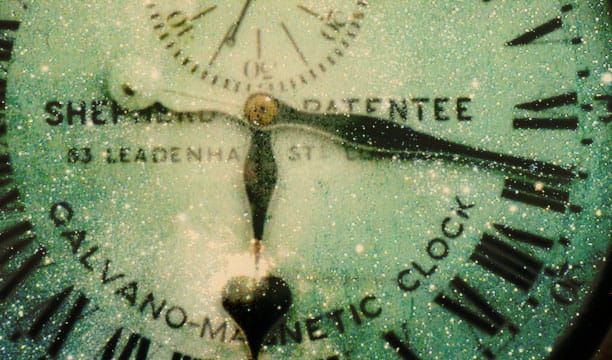
What is a Time Anomaly?
We speak easily of ghosts.
The word is as old as anyone can remember, way back into our distant past. It is familiar too, and we mostly are comfortable in its ambiguity. It allows us to place strange experiences into a category without truly examining them.
A shadow in a corridor becomes a haunting. Footsteps in an empty building become paranormal activity. A figure seen briefly in a ruined mansion, at the edge of vision becomes the dead returning.
But what if some experiences are not hauntings at all?
What if they are fractures in time?
Above the rolling hills at the heart of the Isle of Wight rises Carisbrooke Castle, a fortress whose walls contain nearly a thousand years of history. Saxon defences gave way to Norman stone; medieval lords and ladies walked its battlements.
During the English Civil War, the castle became the prison of unlucky King Charles I, who failed in so many great escapes before his execution in 1649.
Its halls, chambers and locked rooms have echoed to ceremony of all varieties and tests of loyalty; fear and death, including the bright young daughter of the lost king, Elizabeth imprisoned in the castle on the orders of her father's life-ender, Oliver Cromwell.
Few places on this island possess such a density of accumulated human experience.
And perhaps that matters.
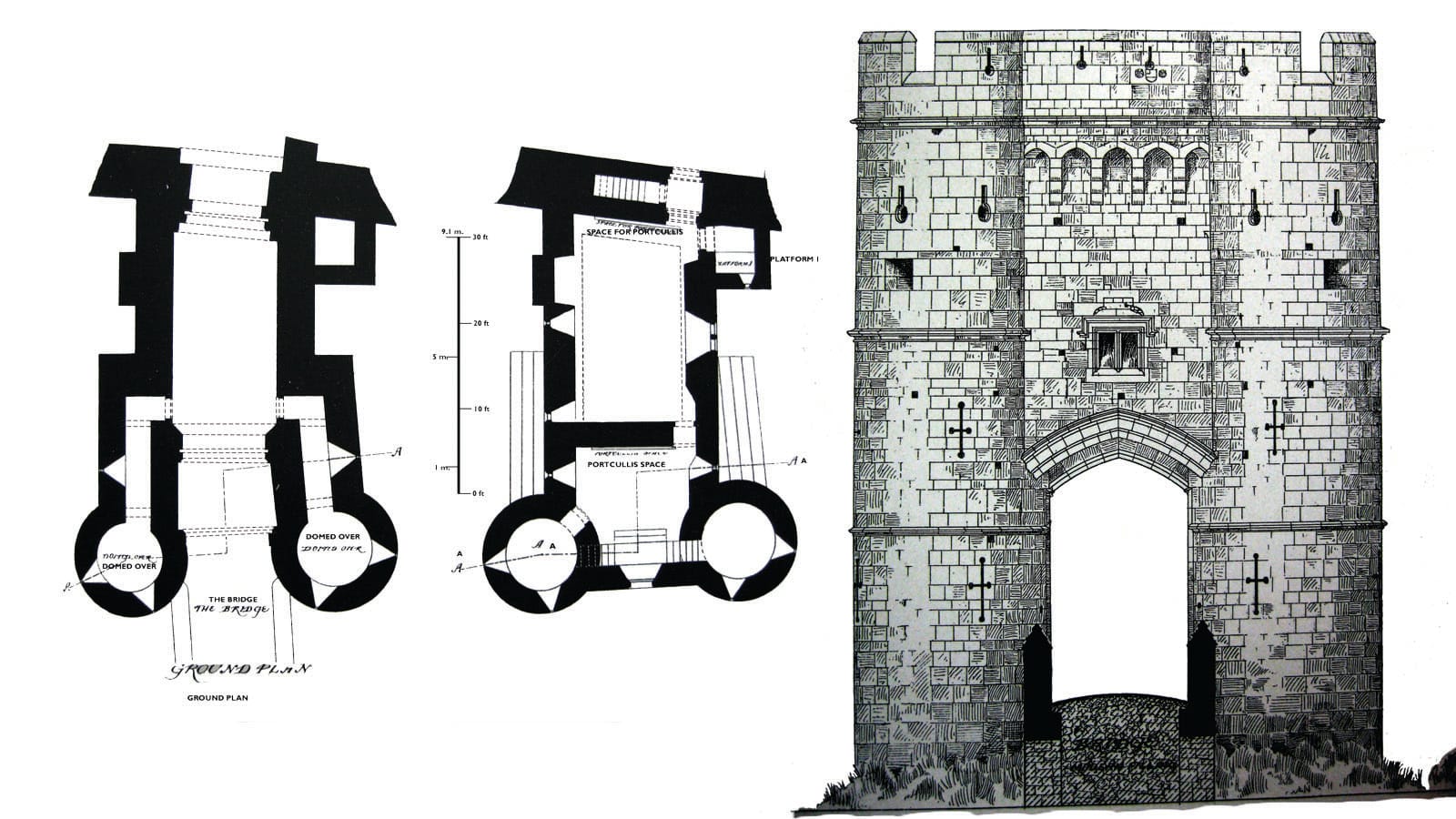
Carisbrooke Castle and the Persistence of the Past
During an investigation at Carisbrooke Castle, clairaudient investigator Margo Williams and a companion both reported an experience difficult to classify by conventional paranormal language.
Inside the gatehouse armoury room, they described the chamber as no longer appearing ruined or historical in the modern sense. Instead, the room seemed restored around them, alive with warmth and occupation.
A fire burned actively in the fireplace. Two figures dressed in Civil War period clothing sat at a table engaged in conversation as though entirely unaware of modern observers standing nearby.
The witnesses were not observing isolated apparitions. They appeared to witness another moment in time still occurring.
This distinction is important.
Time Anomalies?
Traditional ghost stories often assume the dead consciously return to the living. But many experiences reported throughout history do not behave intelligently at all.
Figures repeat actions endlessly. People walk familiar routes without interaction. Soldiers march across fields where battles once occurred. Monks climb staircases that no longer exist. Entire scenes appear complete, self-contained, and indifferent to witnesses.
An entire long lost manor house - Knighton Gorges, in the Vale of Newchurch - was reported by a witness, Brigadoon-like appearing complete with a candle-lit Georgian wig party in full swing, none of which dandy partygoers could be roused by loud hammering on the mansion door.
A coach and horse sometimes is seen careering between the house's gateposts, all that mostly now remains of Knighton Gorges. The ghost carriage vanishes along the road.
A procession of monks sometimes appears in the grounds of old Quarr Abbey, they seem to carry a coffin bedecked in white flowers.
Such events resemble recordings more than visitations. Or are they intersections?
The phrase time anomaly attempts to describe experiences where the boundaries between past and present appear temporarily unstable.
Broader and more cautious than the word ghost. It does not insist upon spirits, religion, or survival after death. It acknowledges a simpler and perhaps more disturbing possibility:
time itself may not behave quite as human beings assume.
 Nick Hammond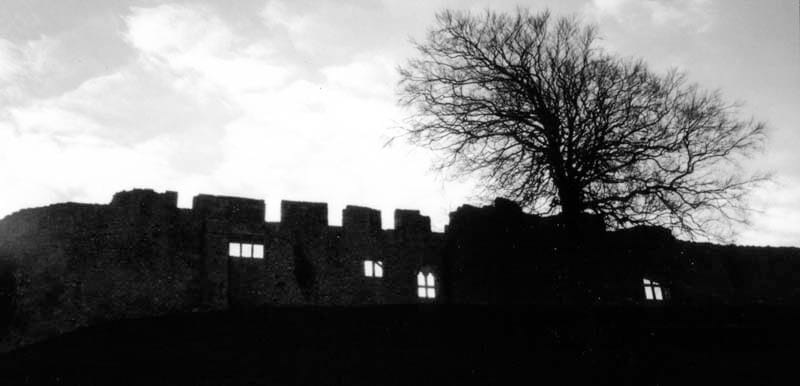
Where Did Time Go? The Block Universe
Modern life encourages us to think of time as linear: the past gone, the present immediate, the future approaching. Yet physics has increasingly challenged this intuitive view.
Einstein’s theories of relativity transformed time from a universal ticking sequence into something bound to observation, motion, gravity, and spacetime geometry.
Some interpretations of modern physics suggest the past may not disappear at all.
In the so-called Block Universe model, every moment continues to simultaneously exist within spacetime. Human consciousness experiences movement through time sequentially, but the structure itself may remain complete, like pages existing together within a book even though we read them one line at a time.
If this idea contains even partial truth, then locations like Carisbrooke Castle become more than historic monuments.
They become intersections of concentrated human time.
Is Stone a Data Medium?
The natural assumption is that stone structures such as castles seem especially prone to such reports.
Is it because they contain centuries of emotional intensity compressed into singular physical spaces. Every room with a lockable door has experienced fear, grief and hope; repeated generation after generation within the same walls.
Unlike modern buildings designed for efficiency and replacement, castles endure. Stone preserves continuity. Perhaps continuity matters more than we realise.
The armoury room experience described by Margo Williams carries the peculiar quality shared by many credible anomalous sightings: ordinariness.
The men were not performing for observers. They were not spectral caricatures rattling chains or delivering warnings. They appeared absorbed in private conversation beside a living fire.
That normality is precisely what makes such experiences unsettling.
For a moment, the witnesses did not seem to observe “the supernatural.” They seemed to observe another present.
Timeslip Effects
Perhaps this explains why time anomaly experiences sometimes produce profound emotional disorientation. Witnesses frequently describe abrupt changes in atmospheric effects: a deepening of the silence, or a sense that reality has shifted fractionally sideways.
This pretty much describes the experience of two Oxford academics wandering the paths in the palace of Versailles, Paris, France. So convinced they had stepped back into a slice of Enlightenment France, they published editions of their "Adventure" in 1908.
Nick Hammond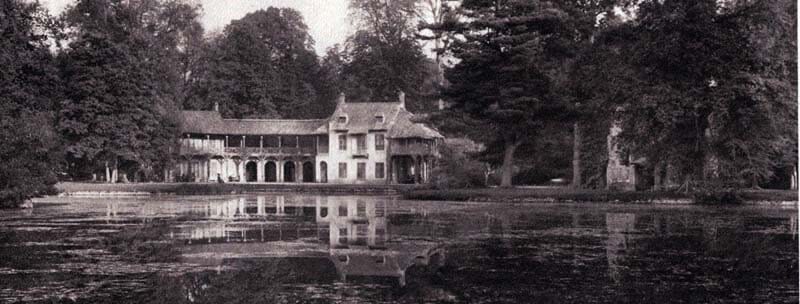
The human mind struggles because it relies upon stable distinctions between now and then. A time anomaly threatens that stability.
It suggests the past is not dead memory. It is live, active existence continuing beyond ordinary perception.
A Worldwide Phenomenon
Ancient cultures may have understood this.
Many sacred sites throughout Britain and the wider world were believed to occupy "liminal zones" places where worlds overlapped. Medieval folklore described moments when travellers encountered processions from earlier centuries, phantom armies, or vanished buildings appearing complete in moonlight.
Such stories are often dismissed as superstition, yet they emerge with remarkable consistency across cultures and eras. Modern witnesses continue reporting similar experiences today.
The language changes. The phenomenon does not.

Sceptics will rightly argue that perception is unreliable. Human beings are vulnerable to suggestion and easily influenced by environment. We carry expectations and often get things wrong. Old buildings naturally stimulate imagination.
Human memory reconstructs experience imperfectly.
All of which is true and necessary to acknowledge. Yet dismissal alone explains very little.
Time Glitches and Big Questions
Why do some locations repeatedly generate such experiences over centuries? And why do independent witnesses sometimes describe identical environments or figures?
Surprised passers-by on the Isle of Wight have seen an entire multi-chimneyed Elizabethan house in Knighton Gorges, and a horses-and-carriage generated from its two solitary remaining gateposts.
Why do so many reports involve coherent historical detail unknown to witnesses at the time? Charlotte Anne Moberly and Eleanor Jourdin, principal and prospective vice-principal of St. Hugh's College, Oxford, included various unknowable details in their 1901 time-slip experience in the palace of Versailles in Paris, France.
They also confirmed their experience did not feel like watching fantasy, the ladies felt they were intruding as though reality itself momentarily misaligned.
One theory for this is to wonder if consciousness interacts with environment in ways not yet understood by neuroscience.
Do places store informational residues through mechanisms entirely unknown to present science.
Or is time far less rigid than human perception requires it to be.
Whatever the explanation, the phenomenon deserves more than ridicule. It deserves careful observation and philosophical seriousness.
Because at its heart lies a question: What if the past is not truly past?
The Armoury was Alive
At Carisbrooke Castle, the fire in the armoury room may have gone cold centuries ago. The Civil War figures are long dead by ordinary reckoning. Their conversation vanished into history before our modern world even existed.
And yet, for a brief moment witnessed by two people, the room appeared occupied once more. Present, not remembered.
That possibility changes how we understand stone ruins. It changes how we think about the power of memory and the presence of history.
Perhaps it even changes us.
Does existence leave impressions deeper than memory, more enduring than flesh?
Beneath ordinary reality, is time still speaking?
And occasionally, in an old stone castle where history accumulated heavily enough, you can overhear it.
Continue Exploring
Isle of Wight Ghosts
The island's folklore, séances, investigations and haunted locations.
British Ghost Cases
Why Britain became the world's greatest storyteller of ghosts.
Unsolved Mysteries
Ancient monuments, lost meanings and the power of wonder.
The Margo Williams Archive
Investigations into survival, hauntings and the possibility of life after death.