Why does one small hill in the centre of the Isle of Wight seem to have attracted faith for thousands of years?
Godshill's Ghosts
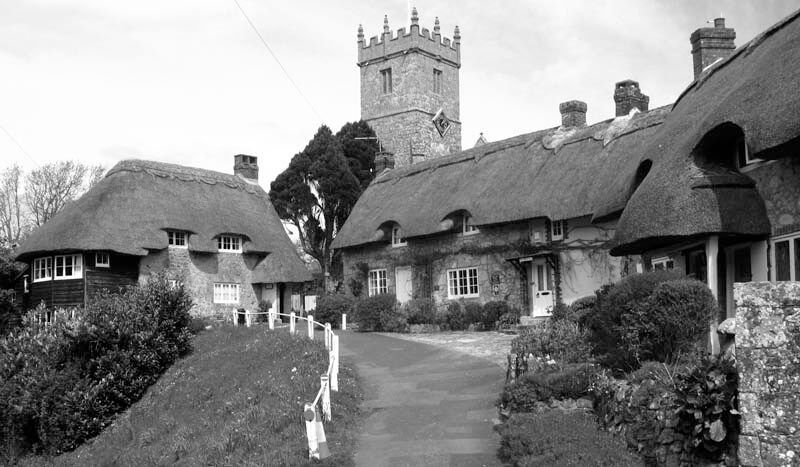
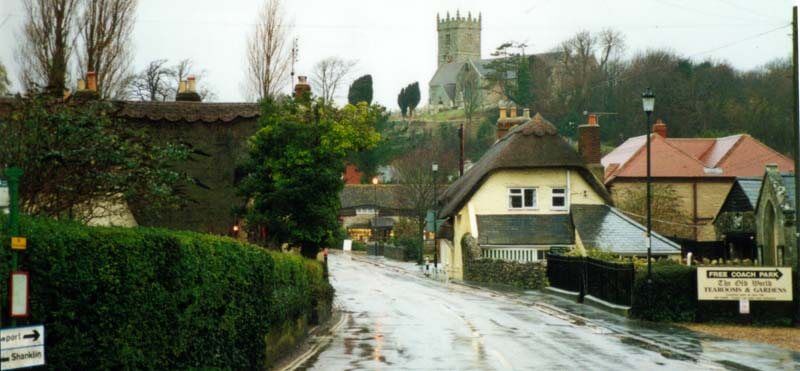
Few villages on the Isle of Wight are as instantly recognisable as Godshill. Thatched cottages, winding lanes and delightful gardens rise gently toward the parish church of All Saints whose tower crowns the summit of a small but commanding hill.
It is also a surprisingly densely haunted village according to Island paranormal investigators. Various ghostly sightings are reported, and presented by Isle of Wight author Gay Baldwin in "Even More Ghosts!"
Godshill's untold ghost story isn't actually about its ghosts. It is a story about the relationship between the living and the dead.
Maybe every ghost story is.
Godshill's greatest ghost is its hill.
God's Hill
Visitors naturally admire the view from its summit; photograph the church; browse the village attractions and stop for tea and cake before continuing their journey.
Yet one mystery often goes unnoticed. Why is the church up there?
The hill appears almost too small to dominate the landscape, yet for centuries it has dominated the imagination. Local folklore speaks of fairies living within it. Antiquarians suggested it may have once been the site of a prehistoric place or worship or burial.
Today no archaeological evidence can tell us precisely what stood here before Christianity arrived.
Before the Church
Like many prominent hills throughout Britain, Godshill seems to have acquired an importance long before written history.
No one knows whether prehistoric people held ceremonies here. Nothing survives to explain why later generations believed fairies lived beneath its slopes. Yet such traditions rarely arise entirely at random.
Across Britain many churches stand upon hills already regarded as special places. Christianity often adopted landscapes that earlier communities had already invested with meaning, transforming old sacred places rather than abandoning them.
Whether that happened at Godshill can no longer be proved. The folklore, however suggests people believed it did.
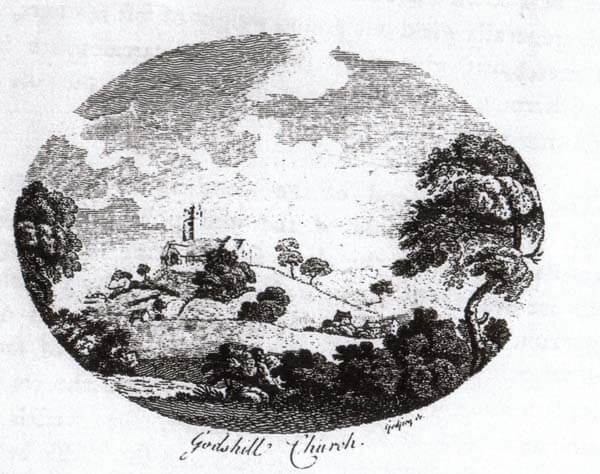
The Stones That would Not Stay Put
According to one of the Isle of Wight's best loved legends the villagers decided to build their new church on lower ground, some distance from the hill.
Stone was gathered, tools were laid out. The groundwork foundations prepared.
When the workers returned next morning everything had disappeared.
After a hopeless search they climbed the nearby hill. There lay every stone and tool; every piece of building material. Assuming mischief they carried everything back.
Next morning it happened again. Stones and materials returned to the summit.
And the next.
By the third morning the community understood the message in the miracle. God had chosen his hill.
Others may quietly have suspected it was something to do with the fairies said to reside within the hill. Or maybe the army of night-owl day-snoring monks newly arrived from their Norman monastery.
Whatever the explanation, the builders stopped arguing and built the church where its stands today. The legend gave Godshill its church and a name.
Why Tell Such a Story?
Whether anyone literally believed stones rolled up that steep sloped hill to its summit, we never will know, but for some reason the community kept the story alive, generation after generation.
Throughout Britain similar legends appear wherever churches occupy unusual or ancient sites. The stories may tell of something deeper than architecture; they tell that one place rather than another became sacred.
They say the decision no longer belongs to builders or the villagers of Godshill, it belongs to heaven.
The Worsley's Church
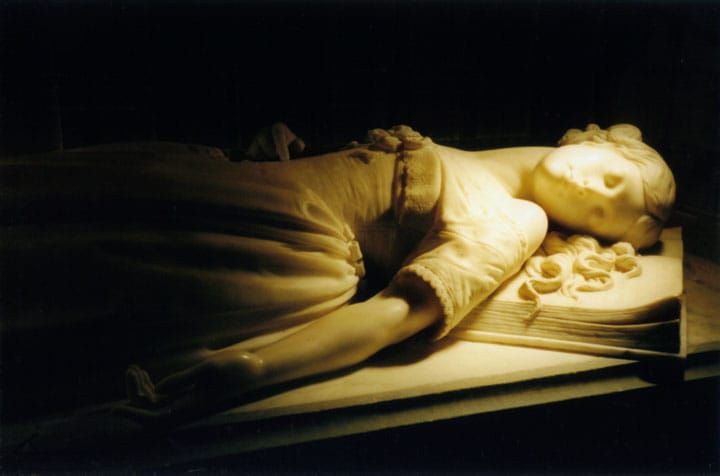
Centuries later a powerful family became inseparable from God's hill. Generations of the Worsley family worshipped and were commemorated here, then laid to rest beneath magnificent monuments inside the church.
No family shaped the later history of Godshill more completely. Among them unlucky Sir Richard Worsley, remembered today as much for the personal scandal as for scholarship and public life.
His unhappy marriage to Seymour Dorothy Fleming became one of Georgian Britain's most celebrated court cases.
Local folklorists have wondered if, after his death, his disappointed spirit never entirely left the church. He is the deep-voiced ghost of All Saints, captured on tape recorder by the novice bellringer in 2005, and quoted in Baldwin's reporting:
The ghost's complaint was clearly heard: "I am so tired."
 Nick Hammond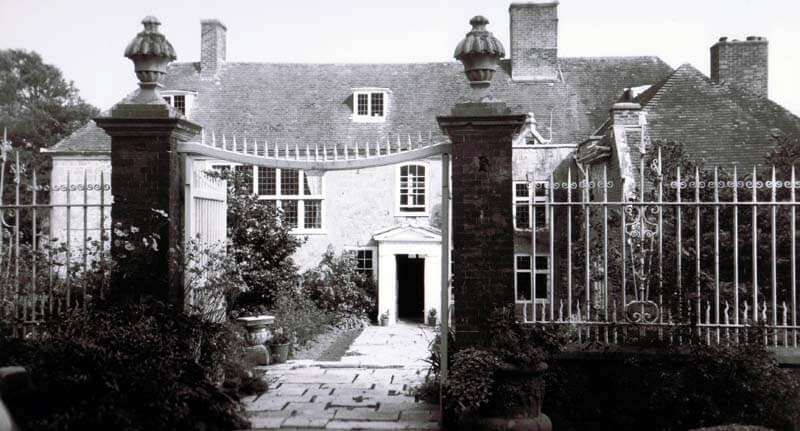
Haunted Godshill
Godshill has something of a ghost glut, according to the report. Others are spotted among village tourist attractions. An old lady ghost haunts the former bakery; in the museum, a presence causes cold spots and a disapproving atmosphere. Some cottages are haunted by a woman' whose footsteps regularly are heard crossing bare floorboards.
Godshill shops also are lively in an undead sort of way, ghosts interact with the living; they touch shoulders and flit around at the glimpsed edge of vision.
Identifying exactly how many varieties of ghost inhabit Godshill is probably an impossible task, but it may be fair to assume every explanatory model happens in this extraordinary village. Timeslip, atmospheric recording, psychological misperception or good old-fashioned folkloric spirit of the deceased.
But it may be safe to assume a large proportion of those phenomena in which a human features, belongs to someone buried in the hill.
Why Did Our Ancestors See Hills as Sacred for Burial?
No one knows why, but different ideas point in the same direction.
Across many diverse cultures people are described as being born from the earth. From Greek and Hebrew mythologies up to present day indigenous traditions mythology describes people emerging from the earth. Traditions separated by enormous distances and periods of time.
Whether these share a common prehistoric origin or arose independently because everyone observed the same natural world remains unknown.
If people believed they came from the earth, then burial becomes a return rather than simple disposal. It is a cycle deep in our collective memory.
Another reason may be that high elevations of ground may be seen as places between worlds, places of encounter. Places where earth reaches toward sky, where the gods may be encountered.
Neolithic barrows may be another piece of the puzzle. These are hills built by human hands, the reason for which we do not know.
Our distant foreparents built hills where there were none, even built hills on top of hills; so if they found one that looked like a barrow, they probably valued it. God's hill in some ways is a barrow-looking hill.
The Godshill Attraction
Medieval Christians valued the hill for wholly different reasons, enough to present a miracle of magic moving stones.
The Worsley family filled that sacred space with memorials, binding their family history to the spirituality of the hill and reinforced it's role as the village's centre of memory.
Today, residents add another layer by telling ghost stories about the semi-invisible people who haunt the houses around the hill, and its church on top.
And visitors in their thousands flock to this village every year.
So why have successive generations in Godshill continued to value this hill?
Without intending to, the Worsleys echoed something older. Like those who raised prehistoric barrows, they sought to anchor their memory to the same small summit, as though the hill possessed a permanence that individual lives never could.
"Remember us" is the meaning.
A Neolithic mound says so through the earth; the medieval church says it through worship. The Worsleys' marble monuments expresses it through sculpture.
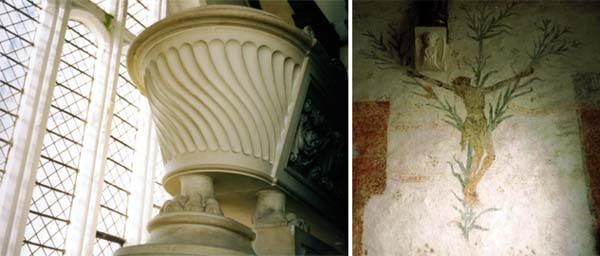
And a ghost story says "remember me" in a different kind of way.
What We Choose to Remember
Standing on God's hill it is easy to imagine an invisible crowd. People may have climbed this hill for thousands of years. Children, mothers, fathers, pilgrims, monks and labourers; soldiers, widows, lovers and priests.
God's hill became a place where the living continued to converse with those who had gone before, entrusting the hill with their dead, their stories, their monuments and beliefs.
Most are gone so completely, not even their names survive. Godshill's prehistoric community is anonymous; as unknown as their language, their personal life stories and what they thought happened after death.
Their entire civilisation is reduced to a possibility of "perhaps there was a shrine."
As history sharpened, individual people started to emerge. Richard Gard among them. His life is remembered by Sir John Oglander. Son of a refugee family from France stripped of their home, their lands reportedly laid waste, arriving as a stranger on the Isle of Wight and eventually being buried just outside the church door.
He escaped oblivion but only just.
Sir John also remembers the Worsleys. They possessed the means to preserve their memory in stone and portraits. Their memorials almost guarantee that people will continue asking who they were.
The hill remembers footsteps, but no names.
Every anonymous labourer who carried the church stones; every medieval mason who shaped the tower; every grieving parent who climbed the hill to bury a child lived a life as real as Sir Richard Worsley's.
Most have vanished without trace, as if they never existed. That loss doesn't make them less significant; it makes history quieter.
Whether marked by magnificent marble or an unmarked grave beneath the roots of a tree, every one of those lives became part of the hill's story.
Are We Defined By Our Relationship to Landscape?
Ghosts may be memories of people. All Saints church's monuments tell us who history chose to remember.
The hill quietly reminds us of everyone else, simply because for centuries generation after generation of Godshillers lived, loved, mourned, prayed, died and was buried inside it.
That is perhaps the deepest reason why God's hill continues to feel significant.
It has become a repository of countless ordinary lives, most of whose stories have almost entirely slipped beyond human memory.
The mystery of Godshill's magic stones is only part of its own long story.
The Hill With No Name
Undoubtedly, God's hill had a different name before that miracle, but no one living remembers it.
Nor can anyone confirm why All Saints was chosen as the name of this church on the hill. St Michael often is associated with high places.
Across Britain and Europe, churches dedicated to Michael frequently occupy hilltops and ridges and sites that may previously have had pre-Christian significance.
The feast of All Saints celebrates countless saints whose names are unknown, not merely the famous canonised figures. This creates a parallel. Inside the church are the great monuments of the Worsleys. Outside lie generations whose memorials have weathered away.
Beyond them are the prehistoric people whose names were never written down at all.
Maybe the church's most curious feature is one most visitors never notice, its dedication.
Whether that choice reflected some forgotten history can no longer be known. Yet there is something quietly appropriate about the name.
For centuries this little hill has gathered people from every walk of life: prehistoric communities, medieval villagers; Norman monks; the Worsleys; forgotten labourers, refugees like Richard Gard, and generations whose names have long since vanished. If any place belongs to All Saints - known and unknown - it may be this one.
Godshill Today
Godshill's story is less about a church, and more about how one small hill has accumulated thousands of years of human memory.
The hill is the archivist. It doesn't literally remember, but it will outlive us. Residents and visitors still climb it.
Some stories will endure; others will quietly fade.
The hill will quietly gather them all.
 Nick Hammond