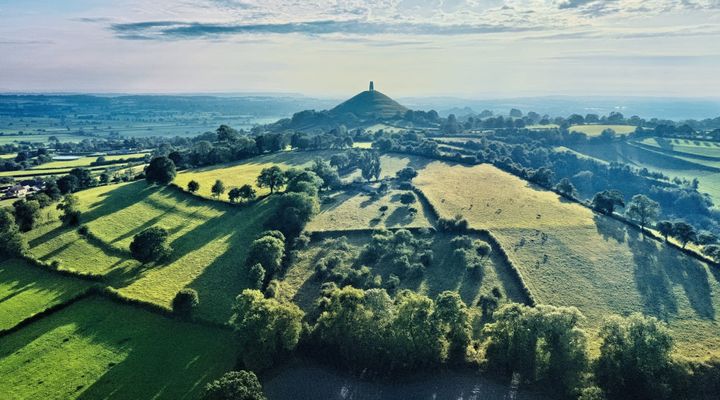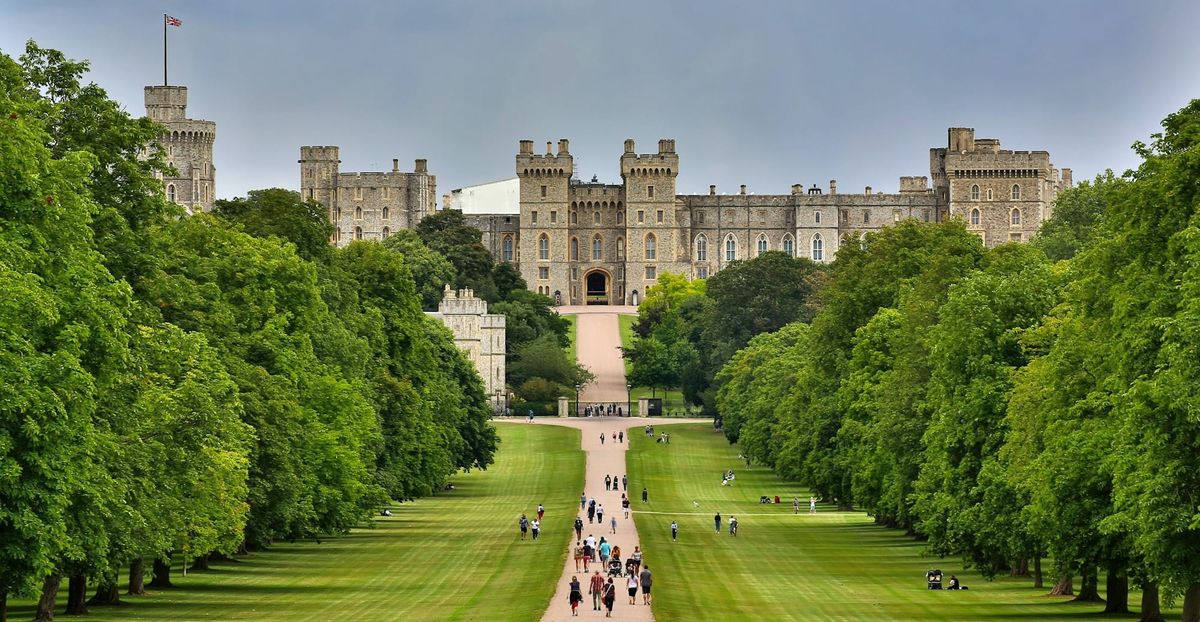
The tragedies associated with Windsor Castle are remarkable in both number and variety. Is this merely coincidence in the long history of one of Britain's most historic castles, or something resembling an old-fashioned curse?
The Ghosts of Windsor Castle
Whether ghosts exist or not, Windsor Castle has become one of those places to which the British imagination repeatedly returns. It is hardly surprising that so many people have imagined its former occupants still walking its corridors.
Windsor's folklore is about history refusing to leave. Nearly a thousand years of monarchy has accumulated here, and its traditional ghost stories almost all concern people who changed England.
Windsor's most famous ghost tradition features Henry VIII. His heavy footsteps are said to echo through the cloisters, accompanied by groaning, occasional angry shouts and the dragging of his ulcerated leg.
Witnesses describe clear sightings of the Tudor monarch, though more often he is heard before anything is seen.
Another royal apparition belongs to Elizabeth I. Although entombed in Westminster Abbey, she is said to walk at Windsor. Among the reputed witnesses was a Guards officer who saw Henry's daughter near the apartments she once rebuilt.
King George III is said to appear at a castle window, waiting for the salute once offered to him by the guards below and raising his hand when he receives it.
Charles I, whose body was returned to Windsor after his execution, is also included among the castle's ghosts. Unlike his Tudor predecessor, witnesses say he neither groans nor makes a fuss.
One final ghost may be older than the monarchy. Shakespeare mentions him in Merry Wives of Windsor: Herne the Hunter, a chain-rattling, cattle-slaughtering ghost of the oaks, crowned with great ragged horns.
Home of the British Monarchy
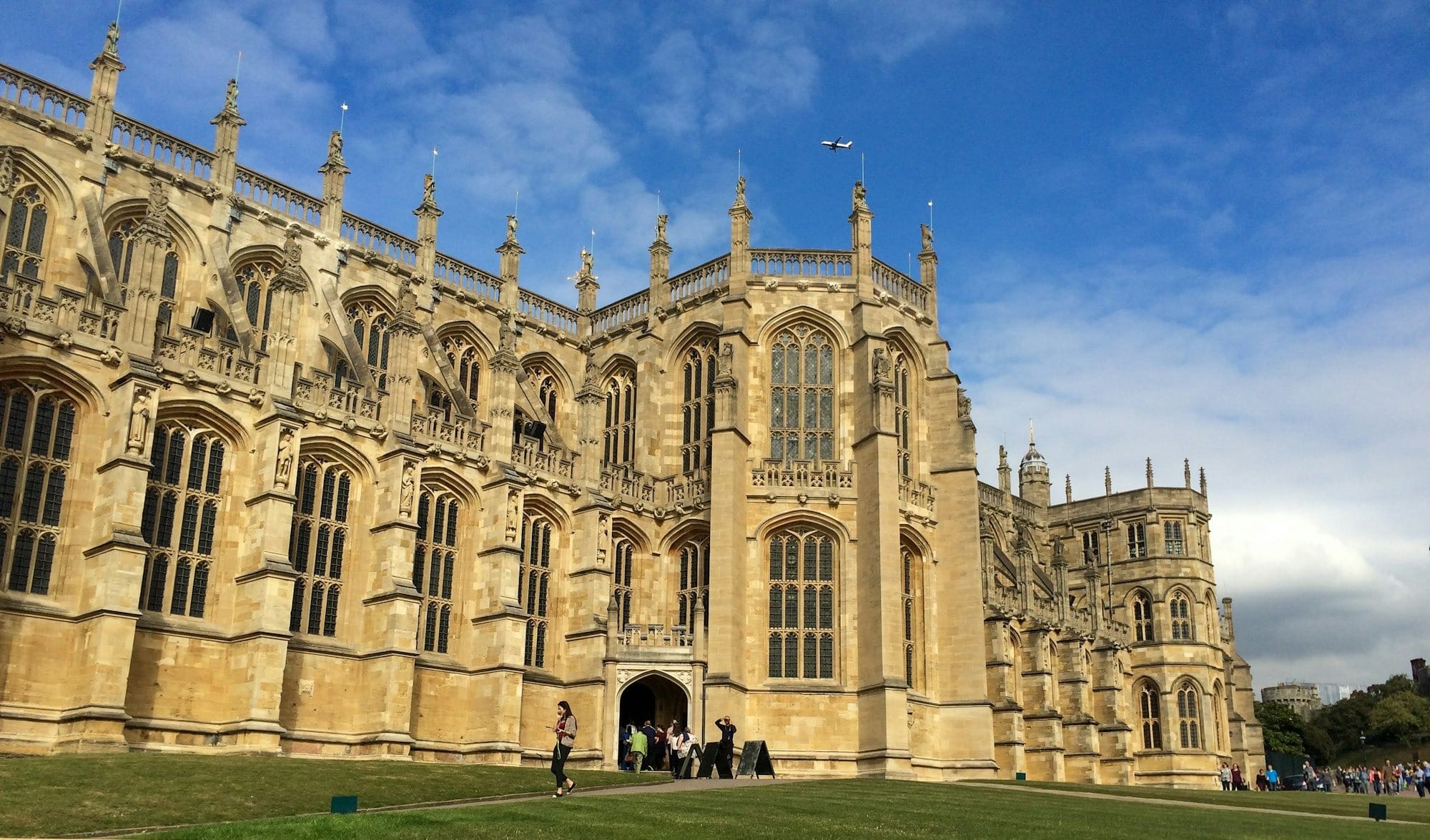
Windsor Castle stands on a hill above the river Thames 24 or so miles west of London. Constructed of pale stone, one ward houses the royal apartments; the other contains St. George’s Chapel, burial place of eleven monarchs and the spiritual home of the Order of the Garter.
Medieval Windsor was even said to possess a relic believed to be the heart of Saint George.
Windsor remains a working royal castle, used by King Charles III and the Royal Family for ceremonial and official occasions.
The castle has been occupied by the monarchy for almost a thousand years. Unlike the Tower of London, whose reputation rests largely on imprisonment and execution, Windsor has been the place where monarchs actually lived.
Windsor was a favoured home of Queen Victoria but became a place of unbearable grief after her beloved Albert fell ill and died there. George III also loved the castle; while Charles II brought Baroque magnificence to the medieval fortress, in which his executed father had been laid to rest.
Henry VIII is buried here too beside his favoured queen Jane Seymour, though the grand tomb he planned was never completed. Every generation leaves something behind at Windsor. Sometimes it is a chapel, a portrait or a state apartment.
Sometimes it is less tangible: the memory of a grieving king; a queen nearing the end of her reign; a family divided by ambition.
Or a nation facing uncertainty.
Succession of Sorrows
Windsor celebrates royal weddings and jubilees, yet it has repeatedly become a place of mourning and illness, where reigns decline and dynasties end.
Perhaps this is simply the inevitable consequence of a landmark building's long history. Yet Windsor has acquired the curious reputation of collecting unfinished stories.
Few places in Britain have remained close to the centre of national life long enough to accumulate such a catalogue: civil war, plague, rebellion, madness, premature death, execution, abdication and family division.
Folklore sometimes presents clusters of ill-fortune as "curses", easy to say but more difficult to explain. It may simply be that Windsor Castle has become a place where Britain's national crises seem to gather.
Gathered into Windsor's history are Henry VIII's painful decline; Elizabeth I's death, unmarried and without a child of her own; the imprisonment and execution of Charles I; and George III's descent into mental illness.
Its later history encompassed George IV's unhappy family; Edward VIII's abdication; and the comparatively early death of George VI, worn down by illness and the burdens of the Second World War.
The death of Diana and more recently that of Elizabeth II changed the place Windsor occupied in the national imagination.

The Burden of History
Sorrow dates back before the Tudors.
King John's reign ended in civil war; Henry III endured rebellions; and Edward III, who made Windsor the ceremonial home of the Garter, outlived both Queen Philippa and the Black Prince before declining in old age.
Richard II was deposed and died in captivity; and Henry V died unexpectedly, leaving the throne to an infant son.
Henry VI's periods of mental incapacity helped create the instability from which the Wars of the Roses emerged. Edward IV died unexpectedly, after which his young sons were taken to the Tower of London and disappeared from public view. Then came Henry VIII.
The number of tragedies is remarkable, but so is the variety.
Maybe this has nothing to do with ghosts. Maybe it is the extraordinary burden of history carried by one place.
Every king or queen begins as an individual; accession requires them to become the monarch. That is a profound psychological transformation.
Related Essay
 Nick Hammond
The Ghost of Monarchy
Monarchy asks something extraordinary of ordinary people. Every sovereign arrives at Windsor as a son or daughter, husband or wife, parent or grandparent. Within these walls they cease to be known simply as themselves. They become the Crown.
The office begins to outlive the person.
Windsor represents something old and English. William the Conqueror chose the site. Almost every sovereign since lived there, rebuilt it, mourned and celebrated or been buried there.
Each new king or queen walks corridors built by predecessors, sleeps beneath portraits of ancestors and attends services in St. George's chapel surrounded by centuries of royal dead, constantly reminded that they occupy an office vastly older than themselves.
It is difficult to imagine a workplace quite like it. In that sense Windsor is not haunted by Henry VIII or Elizabeth I, but by expectation.
When Charles III became king, he inherited more than a job. He inherited an identity already shaped by a thousand years of predecessors. He became part of an institution that existed before he was born and will continue after he dies.
An extraordinary thing to ask of any human being.
In Windsor's ghost stories Henry VIII still limps through the cloisters, George III still acknowledges the guard. Elizabeth I still walks the library. Whether these ghost stories are literally true is an interesting question, but something else has never entirely left the building: the office itself.
Charles III is the first British monarch to inherit the Crown in the full glare of the digital age. The institution has been questioned before but never through a culture of instant commentary, social media and continual public judgement.
Deference can no longer be assumed, yet the inherited expectations remain immense.
He is measured against his own abilities and against Elizabeth II, Victoria, George VI, and in a sense every sovereign before him.
William may inherit that burden even more acutely. When his time comes, the monarchy may be required to justify itself continually rather than simply exist.
He will become the latest custodian of an institution whose history is both its greatest strength and one of its greatest burdens.
What Truly Haunts Windsor Castle?
The greatest ghost at Windsor may not be Henry VIII, Elizabeth I or George III. It may be the monarchy itself.
Every sovereign arrives as a son or daughter, husband or wife, parent or grandparent, with ordinary hopes and private anxieties. Yet within those walls they inherit an identity fashioned over nearly a thousand years.
The individual must somehow make peace with the institution. The person becomes the Crown.
Every sovereign leaves a mark on Windsor, but Windsor shapes them in return. Each reign adds another layer to a story that began almost a thousand years ago. Whether or not Henry VIII still walks its cloisters, one presence has never departed.
Monarchy itself.
Tag Hub: British Ghost Cases