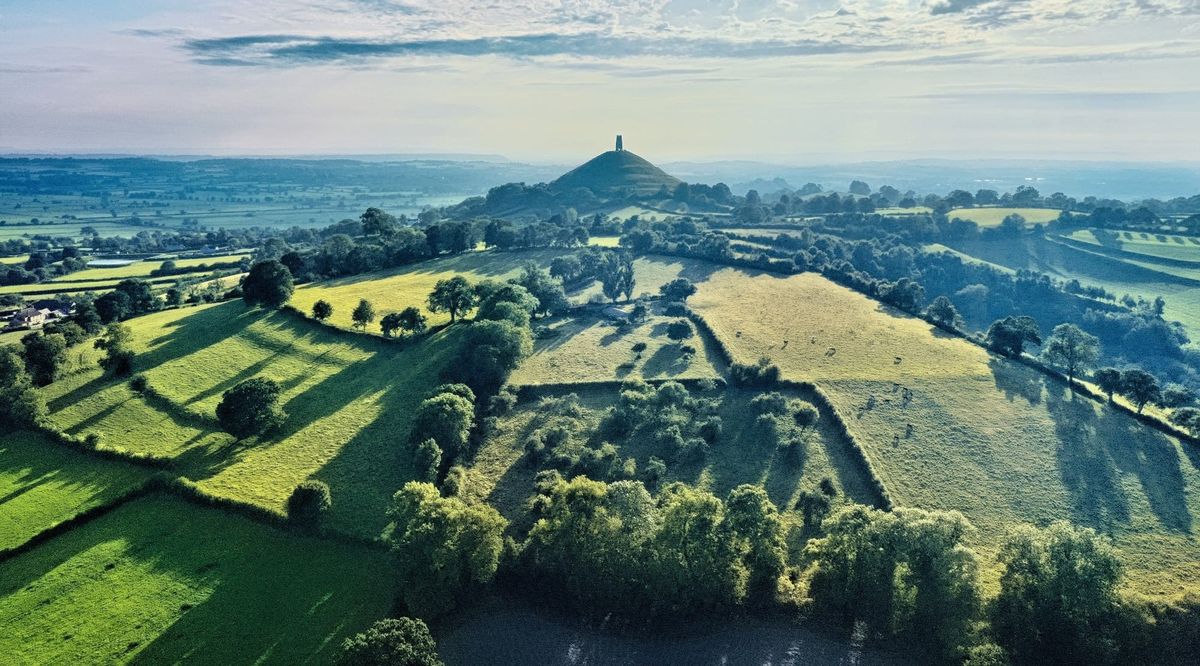
Glastonbury Tor is one of Britain’s most mythologised hills; a geological feature where paganism, Christianity, Arthurian legend and ghost stories have accumulated for centuries. Could all these stories represent an attempt to heal a forgotten wound?
The Hill in the Swamp
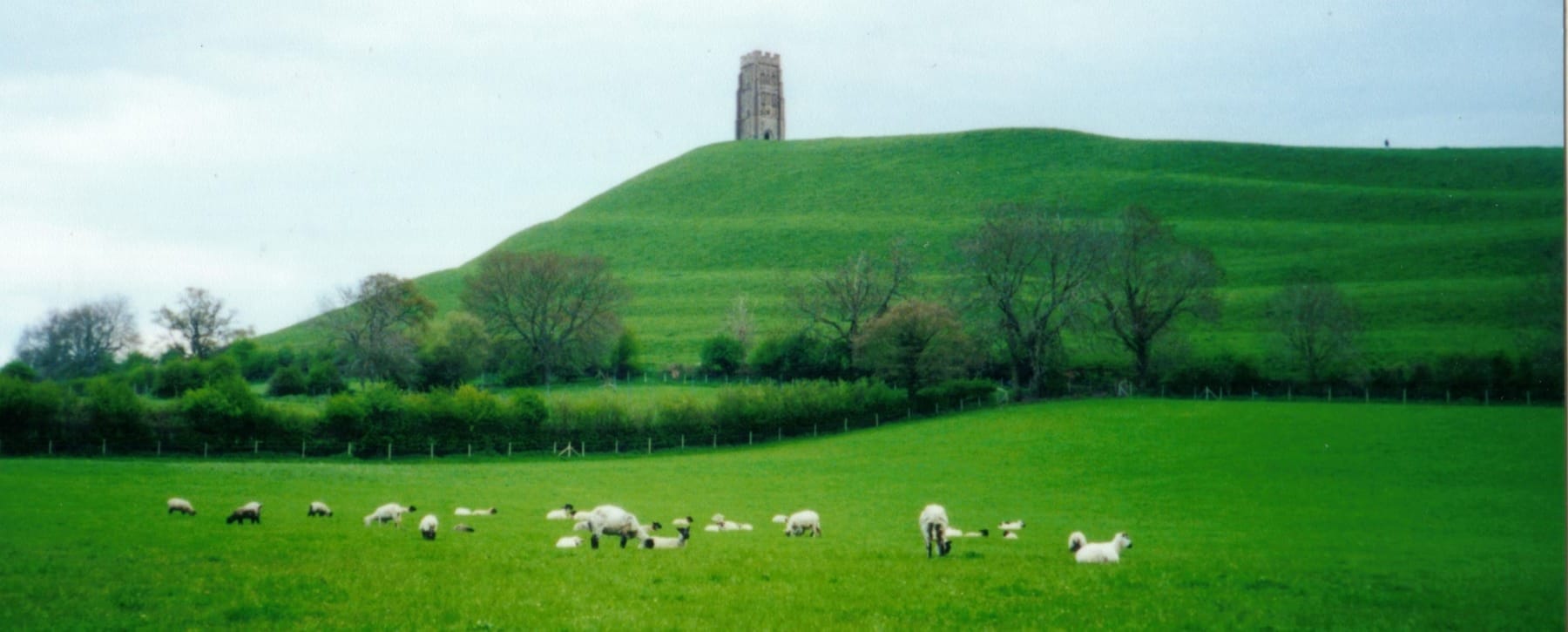
Rising dramatically above the UK's Somerset Levels, Glastonbury Tor has long been regarded as a natural wonder of the landscape.
Many believers consider it a spiritual gateway, possibly one of the most powerful Earth-energy locations in Britain.
Historians and archaeologists believe the hill was regarded as significant during prehistory, with evidence of human activity dating back thousands of years.
Medieval tradition associates the area with the Holy Grail, while Glastonbury Abbey famously claimed to have discovered the graves of King Arthur and Queen Guinevere.
Naturally folklore gathers here. Ghost stories are told about the Tor and the old ruined abbey at its foot. Ghost stories tell of misty monks in procession between the Tor and the ruined abbey below.
During an investigation into the Tor, clairaudient investigator Margo Williams heard creaking sounds of rope and gallows.
Noises which had relevance to the investigation, though no evidence connects the reports to that historic event: the execution of Abbot Whiting on the Tor in 1539.
The Ancient Sacred Hill
Long before Christianity arrived, the Tor appears to have been revered as a sacred landscape feature. Archaeological evidence suggests activity here dating back to the Neolithic and Iron Age periods.
In ancient times the hill would have risen like an island above the marshes of the Somerset Levels. This isolated appearance contributed to its mystical reputation as a fairy hill, inspiring myths of the otherworld realms of the gods.
Folklore often treats hills surrounded by mist or water as entrances to supernatural realms. Occult writers compare it to Celtic “sidhe” mounds, places associated with spirits and hidden kingdoms beneath the earth.
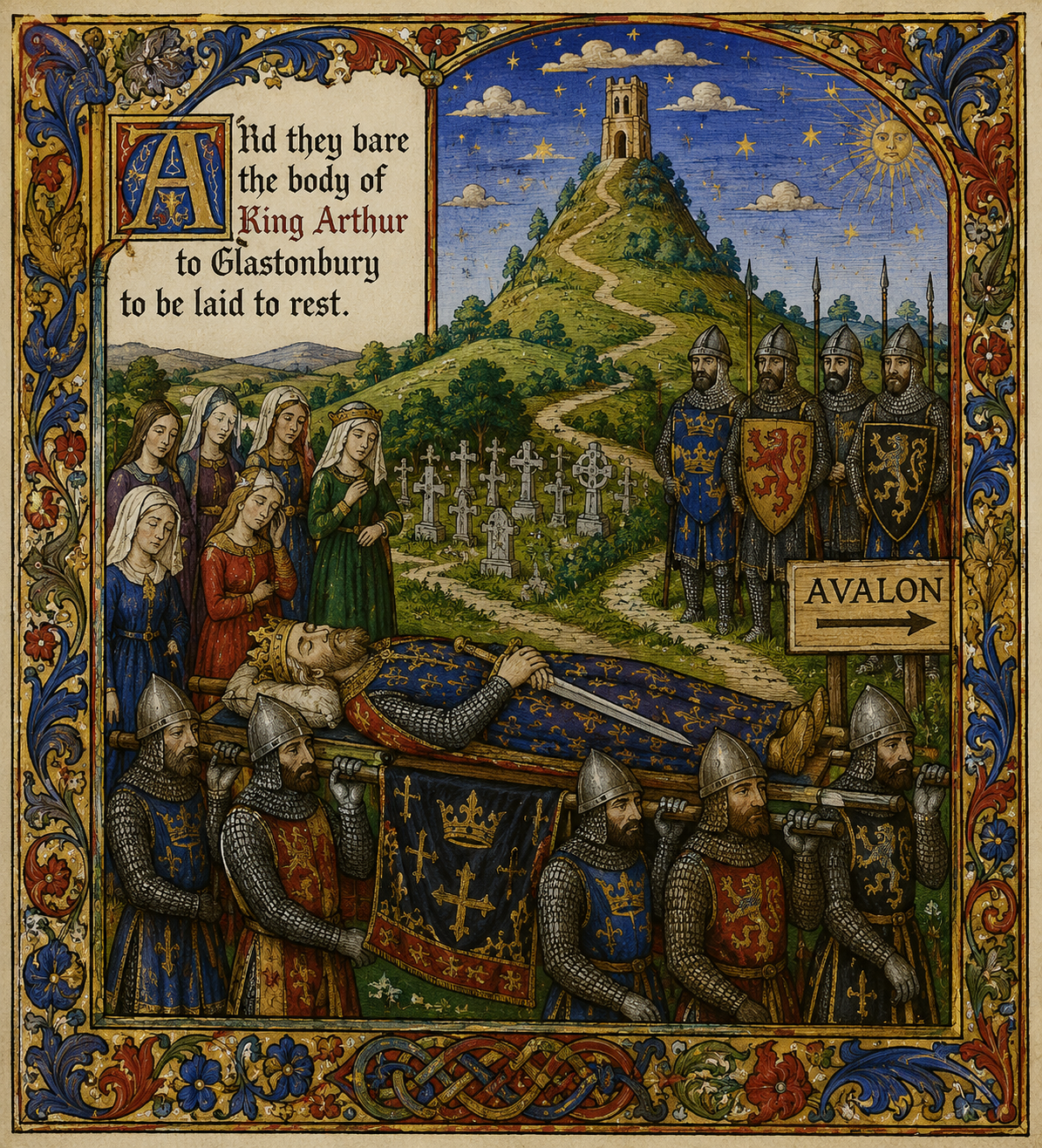
To later storytellers it became associated with Avalon, the Isle of the Dead and the Otherworld. Even today road signs in Glastonbury town point visitors towards "Avalon".
Avalon Today: Ley Lines, Earth Energies & UFOs
The Tor became central to 20th-century theories about ley lines and geomantic energy.
Dowser and occult researchers claimed powerful earth currents intersect beneath the hill, and that the hill aligns with ancient sacred sites.
Some researchers have argued that the Tor forms part of a wider sacred landscape stretching across southern England and including monuments such as Avebury and Stonehenge.
Two streams surface at the Tor's base, the White Spring, so named due to its calciferous deposits; and the Blood Spring, whose water is red from iron oxide, rust deposits.
Christian tradition attributes its red colour to drops of Christ's blood said to have fallen from a phial brought to Glastonbury by Joseph of Arimathea following the Crucifixion.
Within some New Age traditions these streams are believed to amplify psychic experience; helping explain why the Tor is regarded by many visitors as a place of unusual spiritual sensitivity.
In the late 20th century the Tor became associated with UFO sightings and crop circle culture. And ghost story hunting by clairaudient investigators.
The Forgotten Wound
Most visitors know Glastonbury as a place of mysticism. Few arrive thinking first of execution.
Yet in 1539 Richard Whiting, the last Abbot of Glastonbury, was dragged to the summit of the Tor, hanged, drawn and quartered. His head was displayed on the Abbey gate. His monastery was one of the wealthiest and most influential in England. It was plundered and dismantled stone by stone.
For the people of Glastonbury it was the destruction of the centre of their world.
They lost their economy. They lost one of the holiest shrines for pilgrimage in all Christendom. They lost their history, and their identity.
Glastonbury experienced one of England's greatest acts of deliberate forgetting.
Henry VIII destroyed an abbey, attempting to erase an entire worldview.
Something Changed
Then something extraordinary happened.
Over the following centuries the Tor gradually became detached from the historical abbey. It acquired new stories. Arthur and Avalon. Earth energies and Ley lines. And goddess worship. Glastonbury has become a place of modern pilgrimage.
None of these restored the medieval monastery. Yet millions of people again climb the hill seeking spiritual meaning.
The physical abbey never recovered. The sacred hill did.
Communities often respond to collective sorrow by creating places where different kinds of hope can grow. Ventnor town on the Isle of Wight cultivated a botanic garden. Glastonbury cultivated new mythology.
Both transformed painful places into hopeful places.
Glastonbury is now home to modern New Age spirituality. It is home to many reconnecting with ancient druidism.
Historians cannot demonstrate direct continuity between Iron Age religious practice and twenty-first-century spiritual movements.
Continuity is not the only way traditions survive. Sometimes cultures remember emotionally before they remember historically. The landscape acquires new meanings while quietly preserving echoes of much older ones.
Today the Tor is shared by New Age spirituality, modern druid orders, ceremonial magicians, Christian pilgrims, psychic investigators and countless visitors seeking their own understanding of the landscape.
The wider Glastonbury area has developed a reputation as a centre for alternative spirituality, crystal healing, pagan revivalism and esoteric traditions.
The Tor has become the symbolic heart of this movement.
The Sacrifice of Abbot Whiting
Seen through modern eyes, Abbot Whiting's execution carries an unsettling symbolic resemblance to sacrifice.
Because of where it happened. It was a public execution of a religious leader on a sacred hill.
It was the destruction of one belief system by another.
Centuries later people climb exactly the same hill seeking spiritual experience.
History has reversed itself.
Henry VIII intended the Tor to become the place where one religion died. Instead it became a place where new forms of belief continually returned.
The abbey disappeared. The pilgrims did not.
Perhaps a hill cannot remember. But its community can.
And sometimes, when one faith is destroyed, another grows quietly in its place. It cannot replace the past, but it can help a community continue living with it.
Glastonbury Tor continues to invite the same questions: can a landscape recover from historical violence? Can stories become a form of healing? Each generation has answered differently, yet the pilgrims continue to climb the hill carrying new beliefs to a place where old ones were once almost destroyed.
Related Essay
 Nick Hammond
Topic Hub: British Ghost Cases