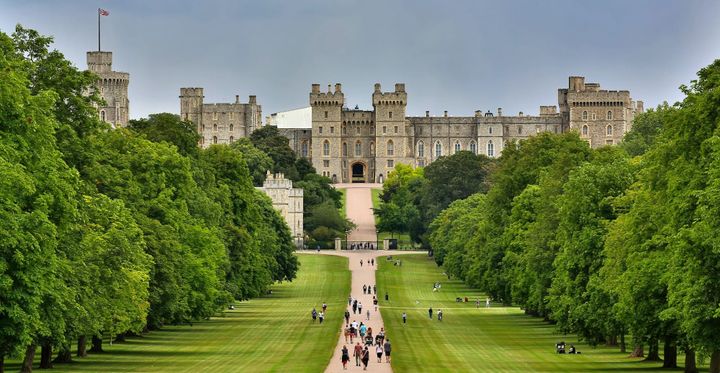
Portsmouth Naval Dockyard endures as a military institution, but also as a symbolic coastline of Britain’s relationship with the sea: powerful, haunted, practical, and never entirely explainable.
Portsmouth's Decks of History
Portsmouth Historic Dockyard is officially preserved as a heritage site. Both museum and working naval space, it harbours historic ships, exhibitions and active naval infrastructure nearby.
Portsmouth Dockyard blends tourism, preservation, and military function.
Modern landmarks such as the Spinnaker Tower dominate the skyline, but beneath the contemporary waterfront remains a deep continuity of maritime identity.
Past and present overlap like tidal water.
Visitors today often report uncanny experiences: footsteps fall on empty wooden decks. Sudden cold shifts inside the cabins and old rat ways deep in the heart of the historic restored ships.
And an eerie sense that the harbour is aware of those who walk its history.

Ghosts of Portsmouth Historic Dockyard
Across two millennia, Portsmouth’s naval story has sedimented as layered maritime mythology:
Dockyard ghost lore tends to fall into three categories: Warship Hauntings, reported sightings of crew still on duty in HMS Victory and HMS Warrior.
Land-based sightings. Ghostly figures are seen in rope-house buildings, and at the gates, a ghost of a hanged man is given a name.
Emotional haunting. Tragedy-felt-but-not-seen type of experiences. Most often felt especially at the Mary Rose site.
HMS Warrior The Ship That Never Died
This Victorian ironclad is the most commonly cited active haunting in the dockyard.
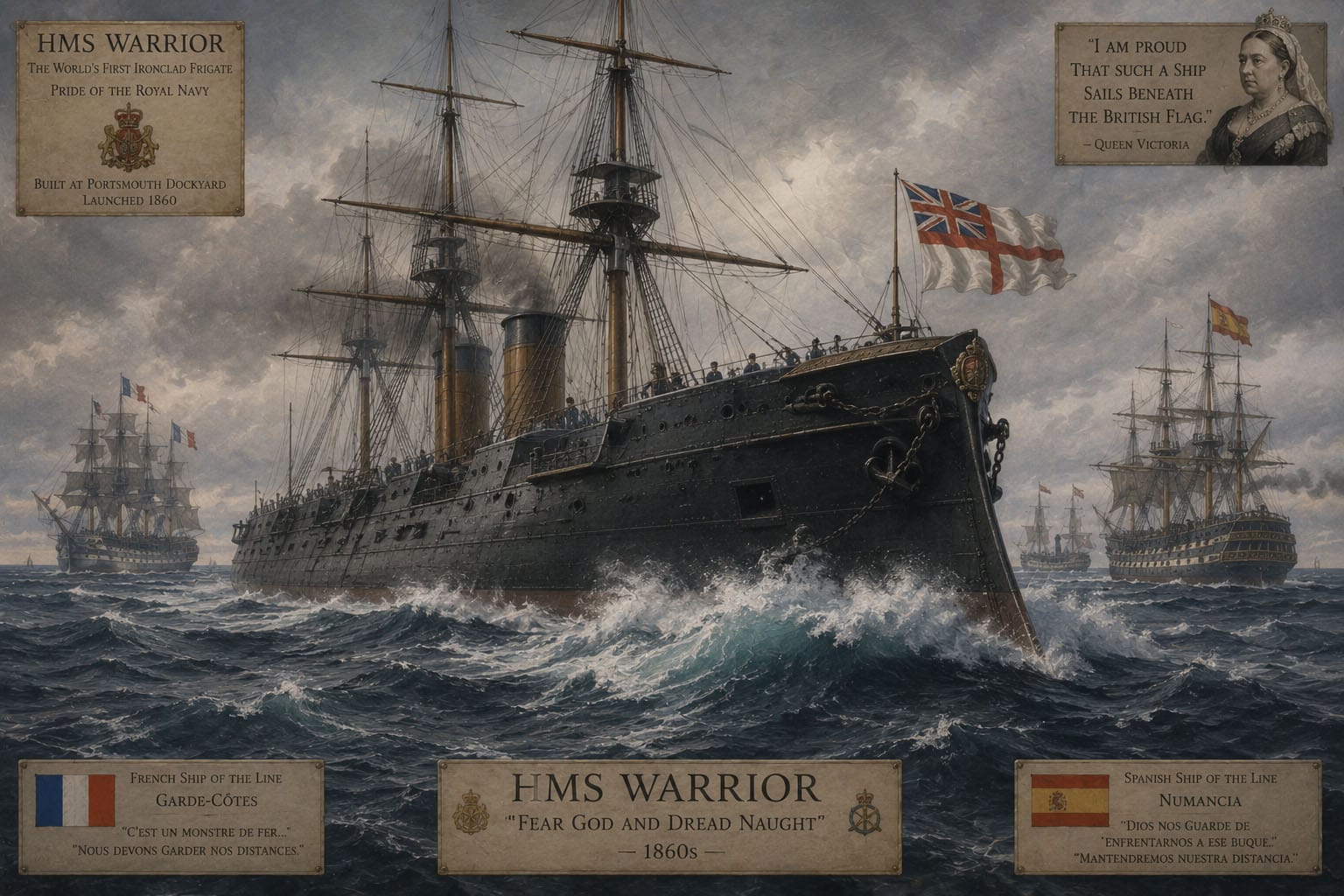
HMS Warrior has its own strong reputation among paranormal enthusiasts. Reported claims include a staff member's testimony on experiencing what felt like an entire crew walking through the ship at night, from bow to stern in formation.
Multiple ghost-hunting visits over the years report hearing unexplained sounds of footsteps, bangs and voices heard in empty compartments.
There is a general sense among some workers that the ship can feel “occupied” after hours.
These stories are often featured in paranormal tours of Portsmouth and have become part of its modern folklore.
Unexplained footsteps in boiler rooms and lower decks are often reported. So too voices or metallic “working sounds” when the ship is empty; and sudden movement sensations in enclosed corridors.
Warrior is often described in maritime legend terms as a ship that “never learned to be empty.” Because she was never lost in battle, folklore frames her haunting as residual life rather than tragedy, as if routine never stopped repeating.
The Mary Rose
The wreck of Mary Rose is less associated with “classical ghosts” and more with what visitors describe as a sense of tragedy or presence.
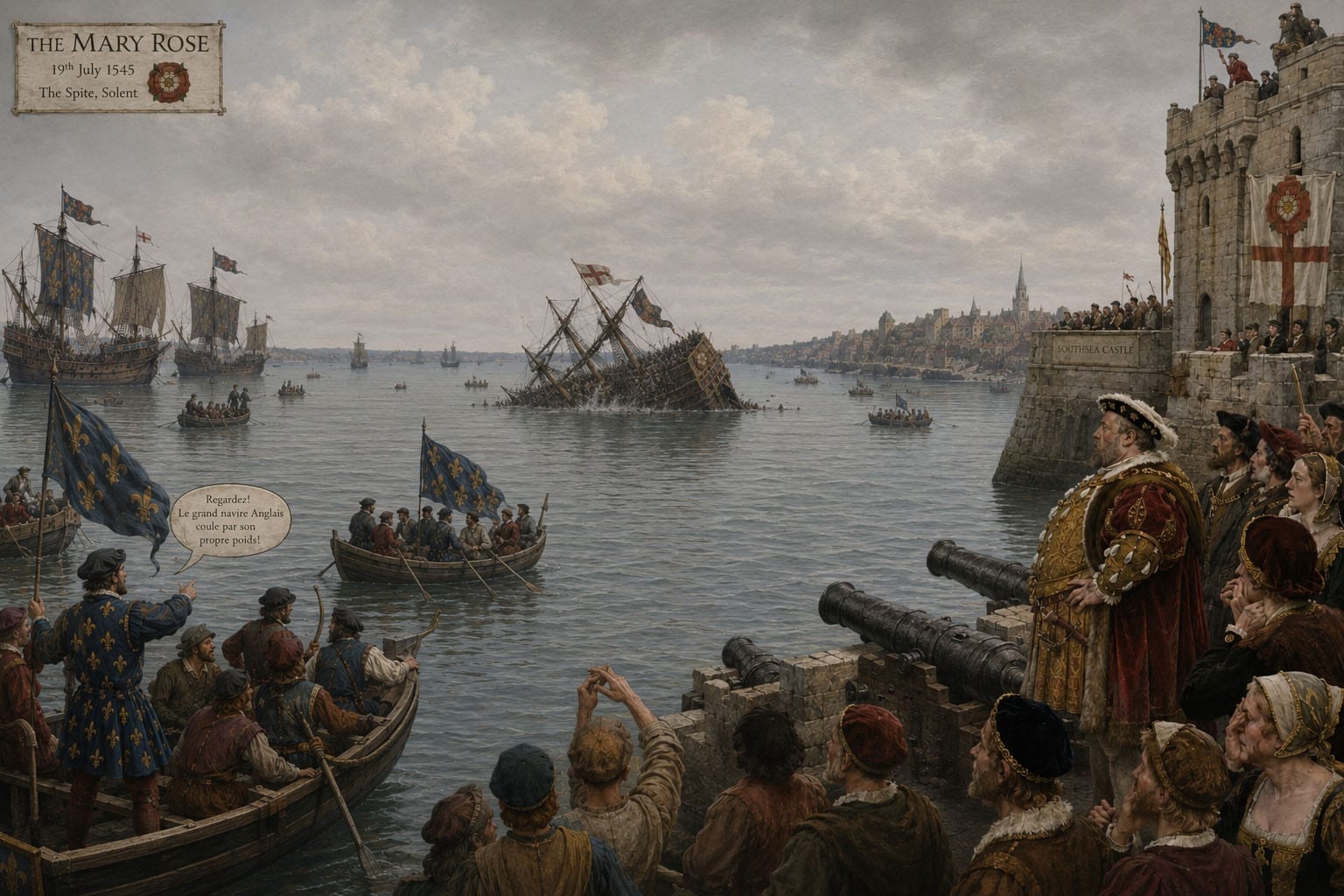
Many visitors to the wreck exhibit in the dockyard relate a strong sense of unease or solemnity. Emotional reactions often are described as overwhelming, mausoleum-like. Sensations of being observed in quiet gallery moments.
Actual sightings of ghosts are not well known, the Mary Rose wreck exhibit is often framed in folklore terms as a memory imprint location.
Not so much a “haunted ship,” the Mary Rose is a memory vessel, where disaster is so deeply preserved it feels present.
Folklore traditions sometimes call this a “stone echo” or “sealed moment.”
Ghosts of the Dockyard
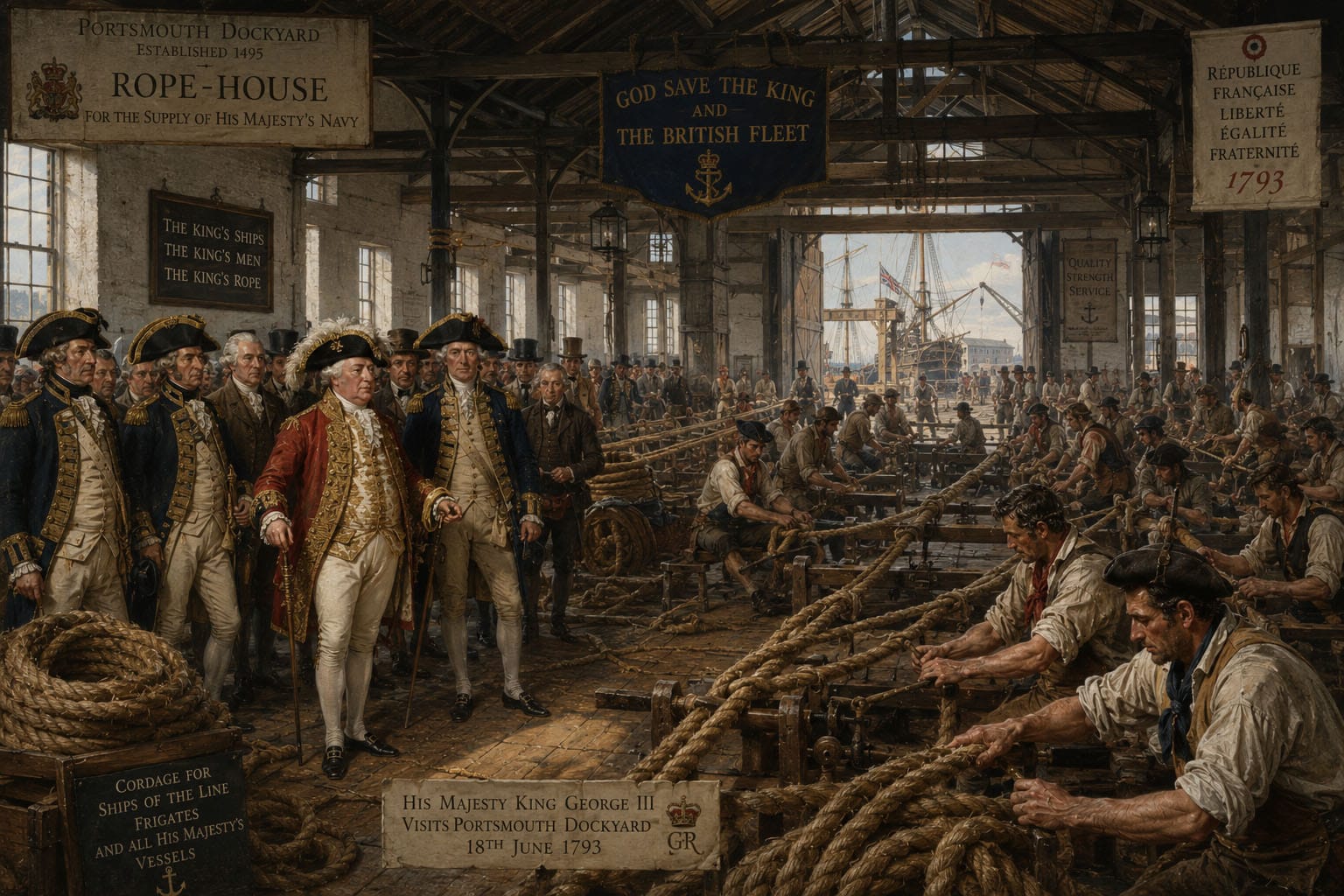
Beyond individual ships, the wider dockyard precinct has reports of shadowy figures near old industrial buildings, especially the rope-houses.
Security staff report seeing figures that appear to move into areas now sealed or bricked off. Sudden cold spots are noted in restricted Ministry of Defence areas.
The execution of John the Painter (John Aitken) in the 18th century, who was hanged at the dockyard gates after setting fire to the rope-house. His presence sometimes is felt near the gates especially by night shift staff.
Most historians and museum staff treat them as maritime storytelling traditions, shaped by centuries of intense naval activity, inspired by war and loss. Tall tales, every one of them. Nothing supernatural.
Dry Docks and Underground Structures. The Unseen Layers
Beneath parts of the museum complex and docks lie original Victorian and earlier naval structures. Reported sightings include flickers of movement seen in areas with no pedestrian access.
Maintenance staff report sounds of tools or hammering when no work is scheduled; and shudder on passing into cold air pockets in enclosed dock passages.
Maritime legend describes these as layered time, where centuries of rebuilding have not erased earlier activity, but simply buried it.
HMS Victory. Nelson’s ship still active after dark
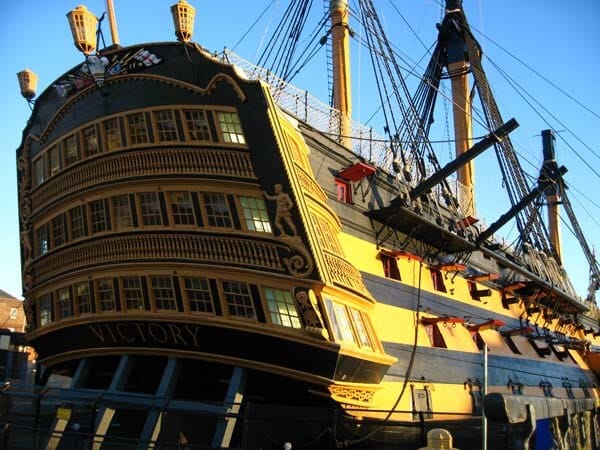
The most famous vessel in the dockyard, HMS Victory, is also the most frequently associated with ghost stories.
A female figure in period dress sometimes is seen moving along upper decks, sometimes identified in stories as Fanny Nelson, though no one yet has confirmed this to be the anomaly's name.
Staff, visitors and maintenance workers sometimes report hearing footsteps on empty decks. Claim spooky sensations of being watched by someone or something else while they were working in sealed or closed-off sections at night.
Shadow-movements often are seen below deck.
Best non-paranormal explanation for these experiences is: they are probably confusion with tour guides in costume
Others insist sightings occurred outside visiting hours.
Field of Memory
Is Portsmouth Historic Dockyard a memory-field? A single connected environment of naval memory?
Footsteps, cold air, presences, sounds without obvious source.
Folklore describes these ships as alive. The Warrior walks; the Victory watches and the Mary Rose remembers.
Ships may be temporarily uncrewed but it seems they are never truly empty.
Tag Hub: British Ghost Cases