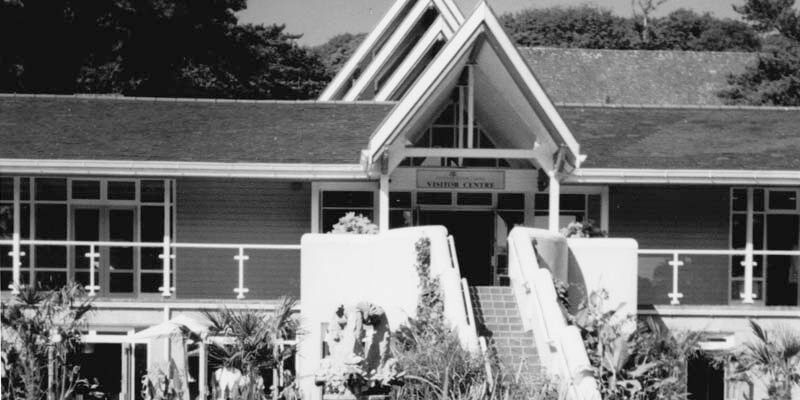
Ventnor's Botanic Garden is one of the Isle of Wight’s most enduring paranormal locations, blending genuine Victorian tragedy with decades of ghost lore. Its hidden memory is the old Royal National Hospital.
Can Nature Transform Tragedy?
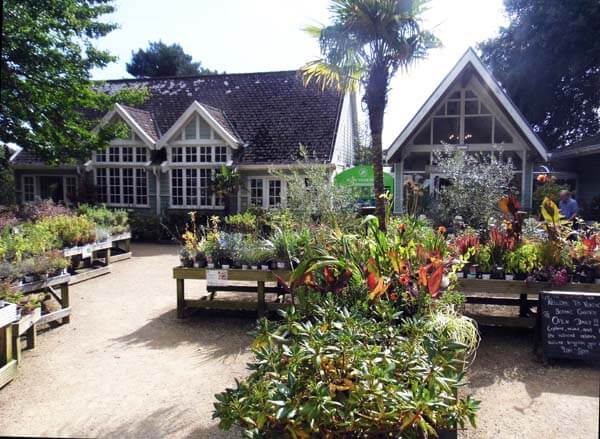
For many visitors and Ventnor residents the Botanic Garden is the Isle of Wight’s paradise, a garden of exquisite bloom and variety located along the Undercliff on the Island’s southern sun-drenched sub-tropical coast.
Beneath today's gardens lies the memory of a vast tuberculosis hospital where thousands came seeking recovery, and many never returned home.
The Victorians believed sunshine could heal tuberculosis. Today visitors walk among the palms, echiums agaves and flowers. The place has become almost Edenic. Yet beneath every path lay thousands of stories.
Does beauty erase suffering, or transform the way we remember it?
Gardens are unusual memorials, they do not preserve the appearance of the past. They transform it. Every spring they renew themselves while quietly acknowledging what came before.
The Botanic Garden is a living memorial, not a cemetery or museum. The hospital has gone, yet people still come seeking restoration, though now of a different kind. Visitors now seek beauty, peace and reflection where patients once searched for health.
The site's purpose has changed, but the hope remains remarkably similar.
How Do We Imagine Paradise?
Across many cultures paradise is imagined as a garden. Eden, of course is the Biblical paradise; as was Elysium for the Romans, and Avalon for the ancient Britons; the Isles of the Blessed; the Buddhist Pure Lands and Islamic gardens.
Why do we so often imagine paradise as a garden? Is it because gardens represent life shaped from chaos? They promise renewal, growth after winter, and hope after loss. Above all, they promise peace.
Ventnor's Botanic Garden is part of a tradition thousands of years old.
The Undercliff Identified
For centuries Ventnor was a small cluster of fisherfolk's huts on the beach of Ventnor Cove, and it remained so until 1830 when medical science pronounced its findings and with a startling suddenness, the region of the Undercliff became world famous.
Sir James Clark, one of Britain's leading physicians, in 1829 described Ventnor as "the most picturesque spot along the coast... the climate most favourable... Nothing along the south coast will bear comparison with it."
After Clark's report Ventnor became the place to winter, and to summer. In the tiny fishing hamlet soon sprang up hotels and boarding-houses and shops and a church.
The sea wall constructed in 1848, converted a considerable portion of the beach into an esplanade, soon lined by a row of villas.
Building the Royal National Hospital
The Royal National Hospital for Diseases of the Chest opened in 1869 under physician Arthur Hill Hassall. Ventnor’s unusually warm Undercliff microclimate was believed to aid sufferers of tuberculosis (“consumption”), long before antibiotics existed.
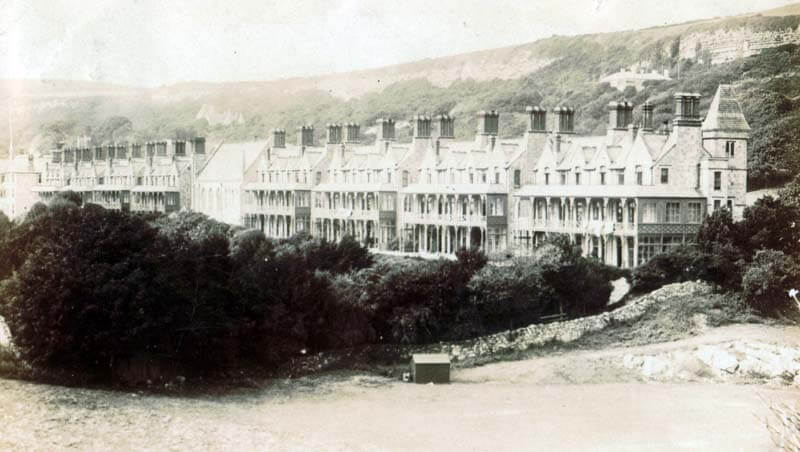
The hospital eventually stretched nearly a quarter of a mile, composed of long balconied wards designed so patients could spend hours breathing sea air and sunlight.
More than 100,000 patients are believed to have passed through the institution before it closed in 1964.
Most visitors come to admire the plants. Few notice the small memorials quietly scattered among them. They commemorate gardeners, doctors, nurses and staff whose working lives disappeared almost as completely as the hospital itself.
The Hospital That Would Not Die
Perhaps understandably the hospital’s atmosphere lends itself naturally to haunting traditions.
Like all Victorian Tuberculosis hospitals it was a place of intense mixed experiences of hope and isolation; prolonged suffering, and often death. Patients sometimes spent years here, separated from families while enduring experimental surgeries and treatments.
The most famous stories concern the demolition of the hospital in 1969, when the former operating theatre was said to have "resisted" demolition in bizarre ways.
Machinery repeatedly failed or was damaged while attempting to pull down the structure. Workers reported snapped cables, collapsing masonry and an oppressive feeling around the theatre.
Some contractors claimed to smell the lingering aroma of ether, the anaesthetic associated with Victorian surgery, drifting from the empty building.
A recurring sighting described by construction workers was encountering a phantom figure in or near the operating theatre doorway. Some versions identify the apparition as an angry surgeon; in others, a pale patient or child watching silently.
These stories were widely repeated in local ghost literature and Isle of Wight paranormal circles during the 1970s and 1980s.
Trouble in Paradise
After the hospital’s demolition, the creation of Ventnor Botanic Garden did not end the reports of sightings. Staff and visitors claimed paranormal experiences, including an apparition of an emaciated man in a dressing gown and slippers walking among the garden paths.
Sensitive visitors to the garden claimed they heard sounds of coughing, groaning, and footsteps late at night. Many experienced feelings of being watched near the former ward locations.
Some complained that one bench in particular is already occupied by a spectral elderly man.
Strange disturbances became so commonplace that staff almost accepted them as part of working life. Light bulbs failed with unusual frequency; electrical equipment behaved unpredictably. The lift developed an inexplicable temperament of its own.
Windows and doors slammed shut on still days. Eventually the curator decided the matter deserved investigation. He called in clairaudient investigator Margo Williams to help.
"I am a scientist," he informed Margo Williams. "I don't believe in ghosts. But things happen here that I cannot explain as of this world!"
What followed became one of the most remarkable investigations in the Margo Williams archive, suggesting that if places somehow can retain memories, the Botanic Garden may be one of Britain's most compelling examples.
 Nick Hammond
Can Paradise Heal Tragedy?
It is fair to ask: What truly survives after we die?
Some lives survive as names carved into stone. Others in photographs, diaries and family memories. Some remain only as stories told by strangers. And a few, perhaps, survive as something harder to explain.
A haunting?
How many sightings reflect the realities of tuberculosis? Witnesses often describe gaunt figures with hollow cheeks or laboured breathing, which is exactly the appearance associated with late-stage consumption.
That detail gives the reports a strong historical flavour, even if you take a sceptical view of hauntings.
Some tales may have become embellished over time, especially the demolition stories, but they remain deeply part of the Botanic Garden's identity as a “haunted” site.
Whether viewed as genuine paranormal activity, psychological suggestion, or the natural emotional residue of a place marked by suffering and hope, the old Royal National Hospital remains one of the Isle of Wight’s richest pieces of supernatural folklore.
Whether or not the medicine proved sufficient, the principle remains. Faced with one of the century's deadliest diseases, the Victorians answered not with darkness, but with sunlight, gardens and hope.
Perhaps that is why the old hospital has never entirely disappeared. Its buildings have gone, yet its purpose quietly remains, hidden beneath one of Britain's most beautiful gardens.
 Nick Hammond