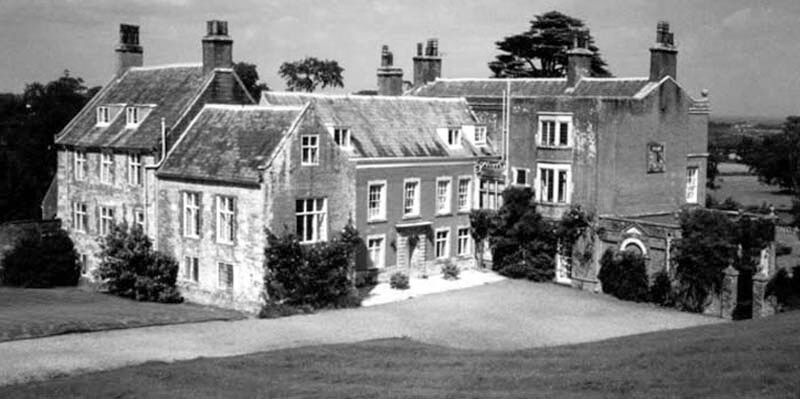
Whether or not Nunwell House's Grey Lady ghost represents a single historical woman, the legend has become the house's memorial to nine centuries of one family's presence.
The Nunwell House Ghost Story
A tradition associated with Nunwell House in Ashey near Brading, describes a Grey Lady ghost.
Some versions of the story claim sounds of sobbing accompany her nightly tours, but unlike so many similarly named apparitions, Nunwell's Grey Lady is said to do more than simply replay the past. She sometimes strikes the living.
This is not the only case in which physical interaction is reported on the Island. In Newport's old Sun Inn building, similar physicality is a long part of the tradition. The difference between this case and those others is there is a description of the supernatural assailant.
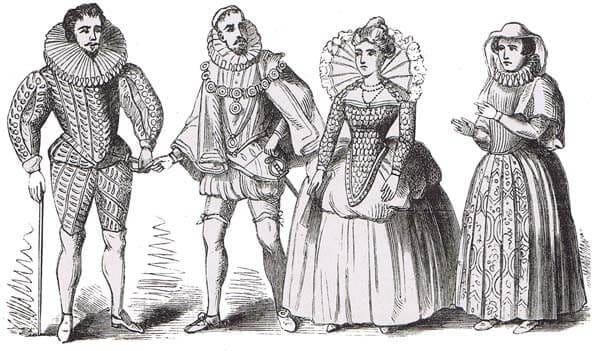
Tradition describes Nunwell's Grey Lady wearing a ruff, a clothing accessory with a limited time-period of fashion.
The continuity of Oglander occupancy at Nunwell is astonishing, dating some nine centuries, dozens of generations yet the apparition appears to belong to one comparatively narrow period.
If witnesses are correct about the ruff the Grey Lady almost certainly belongs to the late Tudor or early Stuart household - roughly between 1570 and 1625. This is the period of Sir William Oglander and his son, the Island's beloved diarist knight, Sir John.
History mostly preserves men far better than women; frustratingly little is preserved about the inner lives of the Oglander women of this period, or any other.
The ruff may help narrow the Grey Lady's century but it does nothing to explain the intriguing aspect of the tradition. If the reports are accurate, how can something that ought to be only a memory physically strike the living?
The House That Almost Vanished
Nunwell House survived only because someone chose not to destroy it.
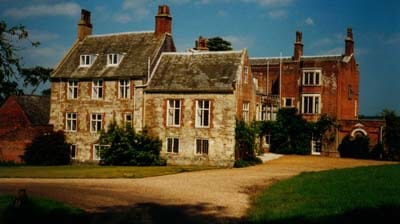
The present building is dated to Tudor and Jacobean times. The name “Nunwell” may derive either from “Nunna’s spring” or “the spring of the nuns,” hinting at an early medieval sacred or monastic association.
During the early 19th century the celebrated architect John Nash persuaded a later Sir William Oglander to remove much of the ancient panelling from the King's Room, so named after King Charles I stayed a night there during his year-long residence on the Island. Nash then encouraged his host to replace the whole house entirely with a modern mansion of his own design.
Lady Oglander intervened, persuading Nash to leave before those plans were carried through. Had she not done so, the Nunwell we know today - and perhaps even the Grey Lady herself - might never have survived.
That episode later became unexpectedly relevant during one modern investigation into Nunwell's history.
The Problem With the Grey Lady
Is violence.
If ghosts can touch us, what exactly are we touching?
A Grey Lady who is only seen sits comfortably into explanatory models. She is a residual haunting, which means she is an emotional recording playing itself.
Or she is a time-slip, two moments briefly overlapping.
Psychology explains her presence as expectation and suggestion, or pareidolia - the human impulse to see faces where there are none.
Or a folklore story repeated until people experience it.
None of these models predicts a slap in the face. That violence changes the relationship. Physical interaction implies agency. And agency implies choice.
A choice implies consciousness, which moves the phenomenon into a completely different category.
A memory cannot decide to hit someone. It is like a film projected onto a wall, the actors cannot suddenly leave the screen and interact with the audience.
A Slip Between Time?
If it is a timeslip the difficulty is similar.
Imagine standing in Nunwell's garden room while someone in 1605 briefly looks inside and sees you. If both moments genuinely overlap, why would only one person become tangible?
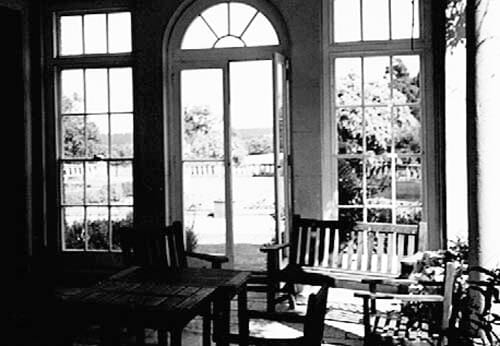
Why can the Grey Lady hit you if you cannot hit her? A true overlap ought to permit interaction in both directions.
If it is a spirit then the problem disappears.
A conscious surviving person could choose to touch or strike. This is what traditional ghost belief has always maintained. The phenomenon fits the folklore ghost story model very well.
If it is psychological then we have to explain reports of witnesses describing physical force. Were they startled? Did something ordinary occur? Was the memory embellished afterwards?
This explanation remains possible but becomes more demanding.
What Kind of Ghost?
The Grey Lady raises an awkward question for every theory of haunting. Echoes should not choose their victims. Timeslips should not possess intention.
If the reports are accurate, then Nunwell asks us to explain both why ghosts are seen, and how they can act.
Ghostly experiences are commonly explained in three broad ways: psychological or neurological experiences; time anomalies or residual recordings; and spirits of the dead.
The Grey Lady fits comfortably into only one of these.
This is the philosophical issue that has occupied witnesses, psychical researchers and sceptics alike for more than a century.
Unlike many ghostly claims, reports of physical interaction challenge almost every explanatory model. Even if one doubts that such events occurred, they are valuable because they expose the strengths and weaknesses of each theory.
Nunwell's Grey Lady appears in recognisable clothing; she seems to possess intention; apparently responds to living people; chooses with whom to interact, and may physically affect the environment.
Taken together, these characteristics closely resemble the traditional folkloric idea of a ghost as a surviving person rather than an echo or residual recording.
If it Walks Like a Ghost, Goes Boo Like a Ghost...
Alleged physical contact is consistent with many ghost traditions which include pulling bedclothes, moving objects, scratching, blows or other physical effects.
Whether these reports are accurate is another matter, but they are not conceptually problematic in the folklore explanation for ghosts.
Residual hauntings, timeslips and psychology explanations all have one thing in common: they explain experience without requiring an active surviving consciousness.
Nunwell's Grey Lady challenges that assumption.
Accounts of her are remarkably discreet. Unlike many famous hauntings, Nunwell has never generated a long catalogue of published testimonies.
Letters quilled by the Oglanders preserved among their venerable deeds and documents mention so many times how beloved the house was to most everyone who spent time there.
The Grey Lady has a sweet place to haunt, so why is she so bitterly associated with the sound of weeping?
Whatever that cause might be, she sits uncomfortably within the oldest explanation of haunting - the spirit of a deceased person.
For most of history there was no puzzle with ghostly beliefs. If someone reported being slapped by a ghost, the answer was simply: a spirit struck them.
Only in the 20th century, as researchers proposed ideas that understand ghosts as memories, time anomalies or psychological experiences did such reports become theoretically awkward.
Why have residual haunting theories become so popular?
They are comfortable; they preserve the mystery without requiring survival after death. The Grey Lady of Nunwell refuses that comfort.
This does not prove that spirits exist, but if the reports are accurate, they demand something with agency.
So what kind of ghost is the Grey Lady?
 Nick Hammond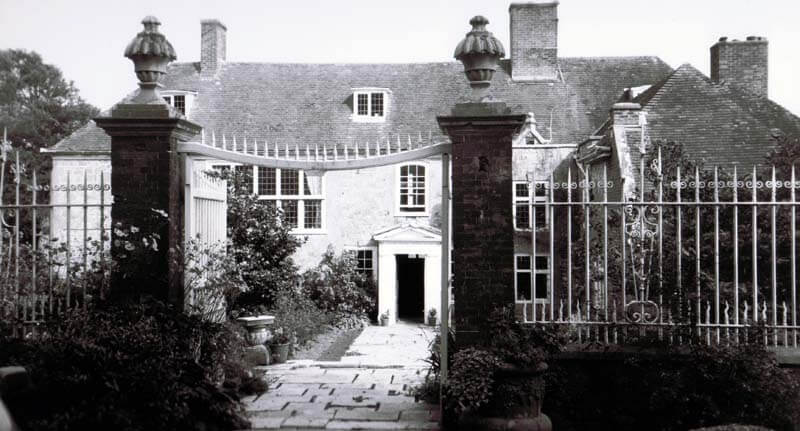
Why Ghosts are Frightening
A residual haunting is almost comforting. It cannot hurt you, it is like watching an old film. A timeslip is astonishing but it too is largely observational. We glimpse another moment.
Even a psychological explanation has its own comfort: the phenomenon is ultimately occurring within the witness.
An apparently physical interaction says something different. It suggests that whatever is present can respond.
This is what people always have feared about haunted houses.
They remember the dead.
But something remembers us too.
Perhaps a house can remember the past. What makes Nunwell so unsettling is the suggestion that something within it can notice the present.
This may be why the Grey Lady of Nunwell has survived in folklore. Many Grey Ladies fade into local tradition because they are passive figures. Nunwell's does not.
If generations genuinely believed she could object to a visitor's presence, the story would naturally be retold. The possibility of interaction makes it memorable.
Whether those reports were accurate, or embellished over time, or were shaped by expectation is a separate question but folklore tends to preserve stories that evoke a strong emotional response.
If ghosts are echoes of the past, then echoes should not strike the living. Yet Nunwell's Grey Lady is remembered precisely because she is said to have done so.
Perhaps not every ghost story belongs in the same category.
The Grey Lady does not challenge the ancient belief that ghosts are surviving spirits. She challenges attempts to explain ghosts without them.
 Nick Hammond