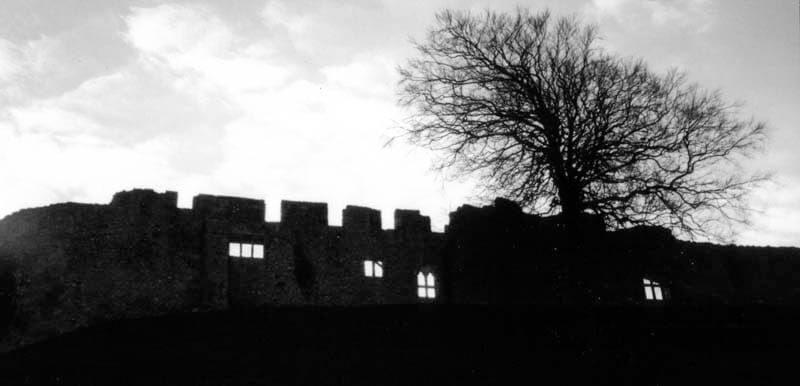
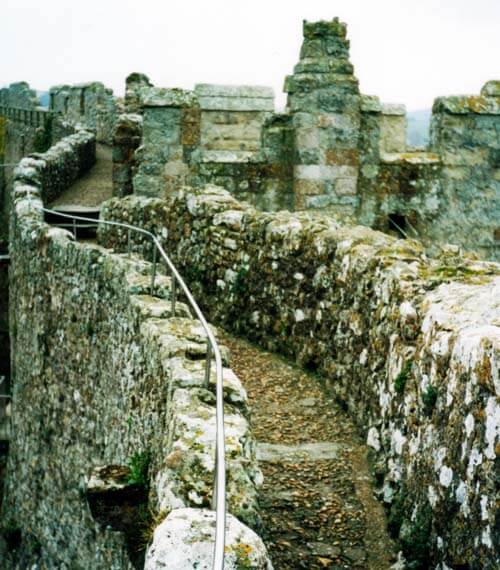
A spectral figure sometimes is seen drifting along the battlements of Carisbrooke Castle. Guesses gather like mist around the mystery of its identity.
The Old Castle
Carisbrooke Castle is one of the Isle of Wight’s most historically charged and psychologically atmospheric locations.
Rising above the centre of the island, the castle has accumulated nearly a thousand years of warfare, imprisonment, political betrayal and death, all ingredients that have helped create its enduring paranormal reputation.
Unlike some haunted sites associated mainly with folklore, Carisbrooke’s ghost stories are deeply entwined with real historical trauma, especially the imprisonment of King Charles I during the English Civil War.
Today the castle is regarded by many paranormal enthusiasts as one of the Isle of Wight’s most spiritually active historic sites.
Ancient Origins and Sacred Ground
Long before the Norman castle existed, the hill at Carisbrooke was an important defensive and ritual location.
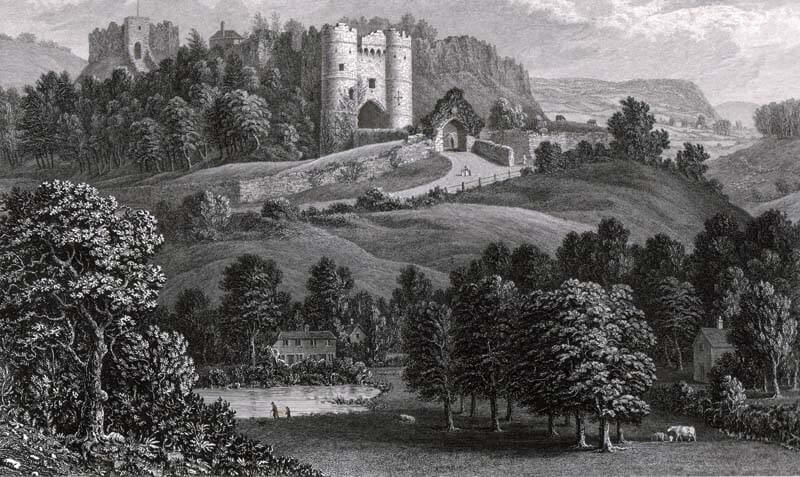
Archaeologists believe an Anglo-Saxon stronghold existed here. Roman activity occurred nearby, and the elevated site probably held strategic and symbolic significance for the Island's Celtic communities centuries before.
In folklore, ancient hill forts and castle mounds are frequently associated with lingering spirits and hidden tunnels. 'Memory hauntings,' are attached where traumatic events supposedly imprint themselves onto the landscape.
The castle’s commanding position overlooking the island interior helped establish its image as both fortress and watchtower, a place always alert to danger.
A Brief History of the Kings and Queens of Wight
Nothing of their remains remain to tell us anything about the first rulers of this prehistoric island; now dust and debris in the barrows which crown the down-land heights and the megalithic Longstone burial chamber near Mottistone.
We still do not know who ruled here before AD 43 when Roman general Vespasian arrived in Brading Haven at the head of the second legion and brought its people to acknowledge his emperor as ruler; but following their withdrawal in the late 400s the first king of Wight is named - wild Wihtgar the Wise - or possibly not, because there are doubts that he ever existed, and that Wihtgar was merely the name for the people of Wight.
Wild Wihtgar
Others claim Wihtgar came from a fierce fighting family: the Anglo Saxon Chronicle notes in the year AD 530 how the Isle of Wight was seized by two Jutish warlords named Cerdic and Cynric who with their army '...slew many men at Wiht-garas-burh,' modern Carisbrooke.
Four years later Cerdic, who had founded the kingdom of the West Saxons died, son Cynric succeeded to the 'throne of spears.' Without an heir of his own, his fierce cousins Stuf and Wihtgar became rulers though Wihtgar was the first to hold real sovereignty of the Island.
During his reign he enlarged the old fortress on Carisbrooke hill, and gave it his name: Wihtgarabirig. He reigned for ten years, died in 544 and was buried in the fortress he had created.
Or possibly not, because Wihtgar may never have lived and breathed as a single individual.
Vectis thereafter was Wiht-land.
Historical reference is silent until AD 689 when Christian rulership was finally achieved on the Island, under the sword of Caedwalla, the new king of the West Saxons.
Only a quarter of the population survived the carnage as Wiht-land was annexed into the Christian kingdom of the West Saxons, and then subsequently came under the rule of the Saxon kings of all-England.
Norman Lords & Lady
Technically not monarch of the Island, the Norman lords following their conquest of England in 1066 might as well have been.
William the Conqueror's chief-of-staff, clever, tyrannical William FitzOsbert was given the Isle of Wight '...for his own use and profit'; though few wept when he was ambushed and removed from life during a visit to Flanders on an errand for his new girlfriend.
However, there was some sympathy for his son whose schemes to overthrow the new Norman king were rumbled all too soon and the Island's rule was taken back by the crown in 1086.
Rulership of the Island then was a gift bestowed by the crown, and in 1180 King Henry I presented it to his favourite soldier Sir Richard de Redvers so completely and unconditionally that the crown had virtually no real authority here.
The de Redvers family ruled this Island in regal fashion from this fortress until the last of their line, redoubtable Isabella de Fortibus effectively queen of this Island, on her death-bed signed over her private ownership to King Edward I for the sum of 6000 marks and so parted with all powers, privileges and lands of the lordship of the Wight in the year 1293.
Sweet Henry
Wardens, lords, captains and governors were thereafter appointed by the king or queen until year 1444 when sweet Henry VI with his own fair hand placed a mimic crown upon the head of the equally sweet teenager Henry Beauchamp, the new Duke of Warwick and so declared him King of Wight.
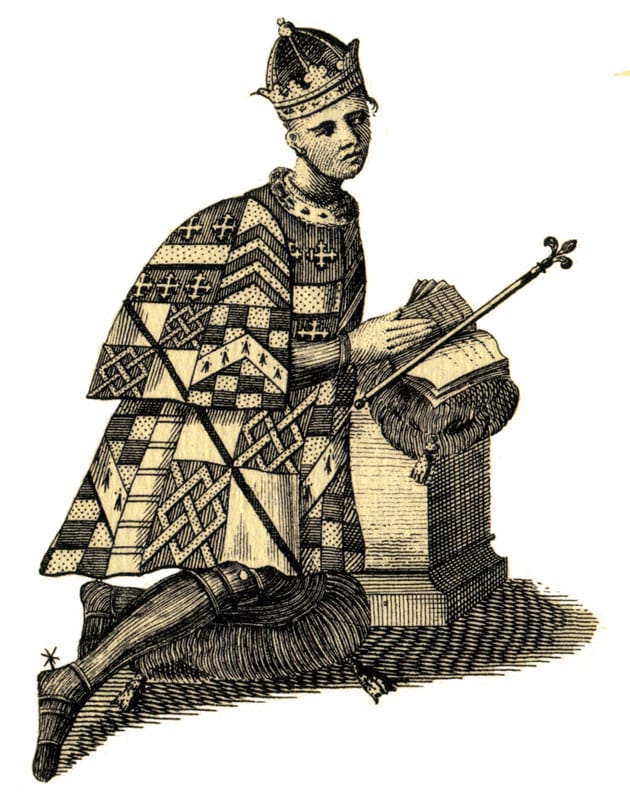
Sadly both youths were doomed. King Henry drifted into pious madness, hostage to the brutal final years of the Wars of the Roses and poor weak Warwick died within four years of his coronation.
The second and last ever king of the Isle of Wight never set foot in his kingdom.
The Imprisonment of Charles I
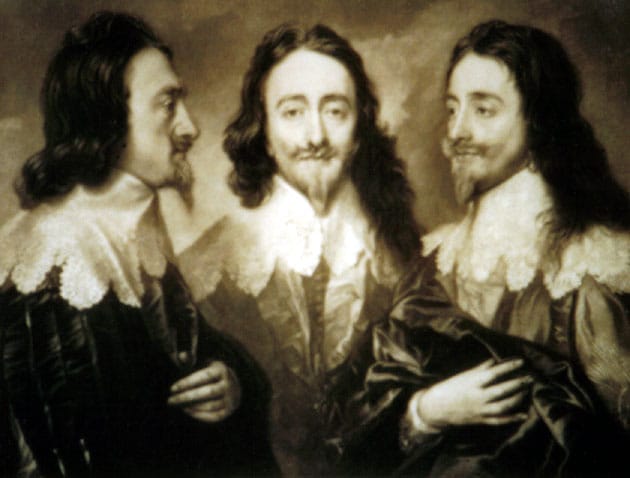
The castle’s darkest and most emotionally powerful legends revolve around the imprisonment of King Charles I between 1647 and 1648.
After losing the Civil War, Charles was confined at Carisbrooke under increasing suspicion and isolation. Though treated more comfortably than many prisoners, he effectively became a doomed monarch awaiting political destruction.
One of the castle’s most famous stories concerns his attempted escape.
According to contemporary reports Charles tried to squeeze through the bars of a window, but became trapped and had to abandon the attempt in humiliation.
The room associated with this failed escape still carries a heavy emotional reputation among visitors.
Various paranormal claims connect to Charles. Sightings of a sorrowful figure in royal clothing are reported; and unexplained footsteps in empty corridors. Sensitive visitors speak of cold spots near his chamber, and feelings of oppressive sadness.
Some visitors claim the castle possesses an atmosphere of despair connected to the king’s final loss of hope before his fall.
 Nick Hammond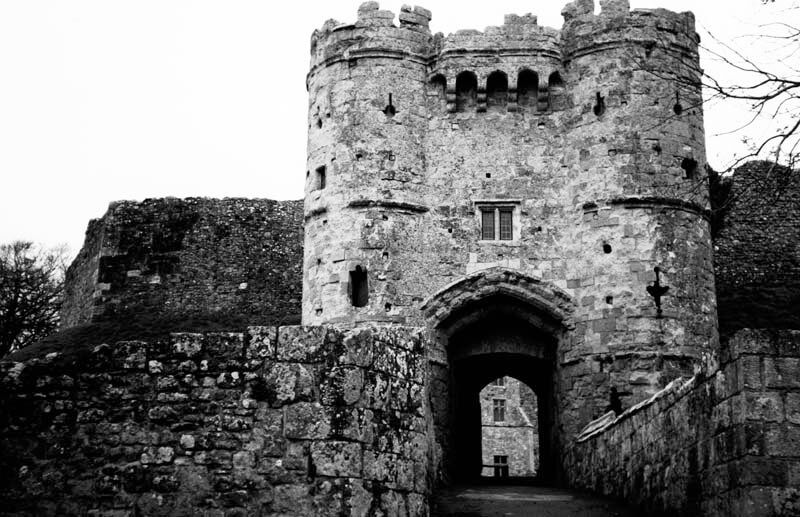
The Grey Lady
Among the castle’s most enduring ghost traditions is the appearance of a ghostly 'Grey Lady.' Descriptions vary, but she is often described as a pale woman in grey or silver garments, silently walking the battlements. Sometimes she appears near stairwells or vanishes into stone walls.
Her identity is the subject of debate, some folklorists suggest she is a grieving noblewoman, perhaps Isabella de Fortibus who lived in the castle and owned the Isle of Wight. Or maybe a woman awaiting news from the Civil War. Others of melodramatic inclination say she is a betrayed lover.
Or she may simply be a traditional residual haunting, a recurring apparition generated by centuries of storytelling layered onto the castle.
Witnesses frequently report sudden drops in temperature and sensations of being watched. Or an uncanny silence before sightings.
Phantom Soldiers and Civil War Echoes
Because Carisbrooke played a role during periods of national conflict, stories of spectral soldiers have circulated for generations.
Some say the shadowy figure on the battlements is the ghost of marksman Peter de Heyno still manning the ramparts, the man whose good aim punctured the commander of a French invasion force back in the 1300s.
Some paranormal investigators describe these as “stone tape” phenomena the theory that emotionally intense events become somehow recorded in physical environments and replay under certain conditions.
The castle’s thick stone walls and enclosed courtyards contribute strongly to these impressions.
Mist, echoing footsteps and shifting acoustics inside medieval fortifications can also create highly suggestive sensory experiences.
The Castle Well and Folkloric Energy
One of the castle’s most famous features is its deep well, historically worked by donkeys turning a treadwheel.
Some visitors to Carisbrooke describe the well area as unusually oppressive or emotionally charged.
Paranormal interpretations suggest underground water may contribute to psychic experiences or electromagnetic anomalies, a common belief in earth-mystery traditions.
The Psychological Atmosphere of the Castle
What makes Carisbrooke especially compelling is the combination of political tragedy, military tension, and medieval architecture, Its story is of isolation and confinement of a king of England.
Even sceptical visitors describe unusual stillness and emotional heaviness in some parts of the castle, and a sense of being observed.
Castles always offer ideal conditions for paranormal interpretation because at a structural level they are labyrinthine, places rife with shadows and strange acoustics. Castles often have a history of violence, and as a consequence are saturated with cultural expectation.
At Carisbrooke, the imprisonment of a king adds an additional layer of national myth and emotional gravity.
The Castle in Isle of Wight Paranormal Tradition
Carisbrooke Castle Museum and the wider castle grounds occupy an important place in Isle of Wight ghost lore.
The castle frequently appears in local paranormal investigations and ghost tours. It is the focus of many psychic accounts.
Within the broader mythology of the Isle of Wight, an island already associated with shipwrecks, smugglers, ancient burial sites and spiritualist traditions, Carisbrooke stands as a symbol of haunted authority and unfinished history.
As a consequence of King Charles' year-long confinement, Carisbrooke Castle for political commentators and romantics, represents the lingering emotional residue of power, imprisonment and loss.
For many visitors, the strongest feeling at Carisbrooke is not terror, but melancholy, the sense that the castle remembers.
 Nick Hammond