The Worsleys built one of southern England's grandest houses, believing it would proclaim their family's greatness for generations. They lost almost everything they hoped would endure. Yet the one thing they never intended to preserve - their story - has survived remarkably well.
Appuldurcombe's Illusion of Permanence
Standing in a natural earthen amphitheatre beneath the chalk downs near Wroxall, the ruined shell of Appuldurcombe house appears timeless. Yet it is in truth, a monument to impermanence.
For more than four centuries the Worsley family shaped the history of the Isle of Wight. They served kings, governed the Island; amassed wealth; built magnificent estates and expected their name to endure.
Few families seemed more securely established. History had other ideas.
The Worsley Family Ascends
The Worsley family inherited an island estate shaped by earlier generations whose own ambitions had once seemed equally permanent. Every great house stands upon older stories.
The Worsley's rise began through royal favour, not ancient inheritance. Sir James Worsley entered the household of the young prince Henry, the future Henry VIII. Tradition remembers him as the prince's whipping boy, a role that brought him into the king's closest circle.
Henry never forgot his loyal servant. James was appointed Groom of the Royal Wardrobe, Keeper of the King's Beasts at the Tower of London, and in 1517, Captain of the Isle of Wight.
With influence came opportunity. The Worsley family acquired land and prestige; Appuldurcombe became their principal seat.
Each generation expected to strengthen what the previous one had built.
Building for Eternity
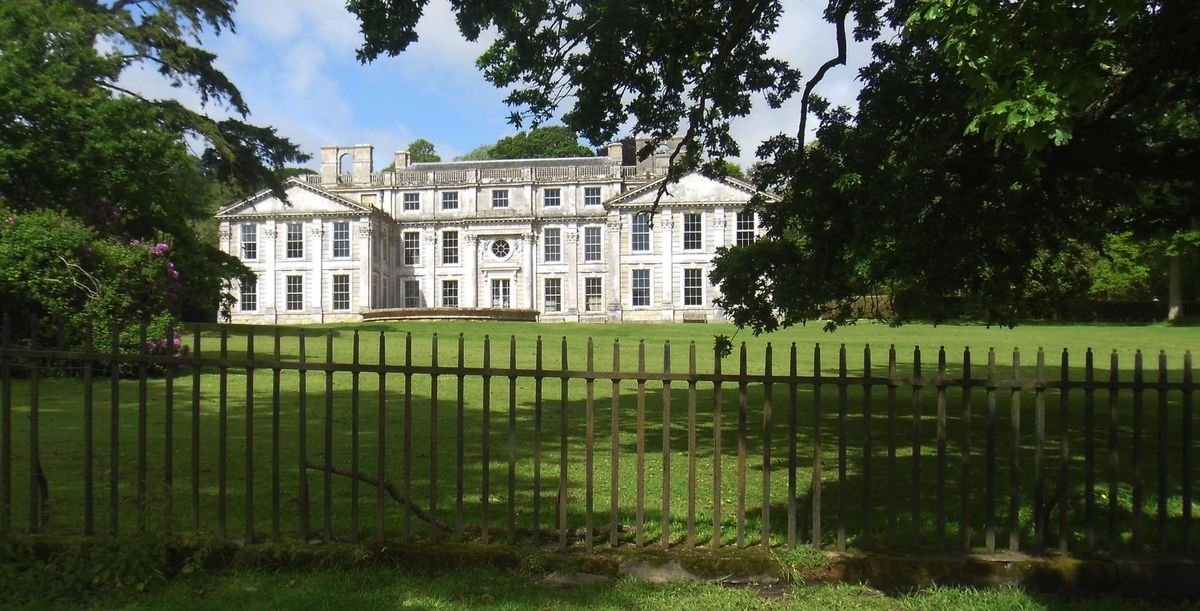
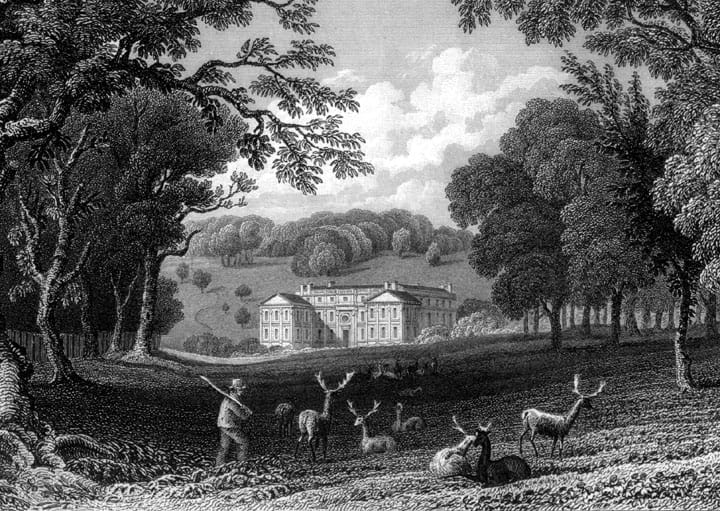
During the 18th century Sir Robert Worsley replaced the older Tudor house with the magnificent Palladian mansion whose ruins survive today.
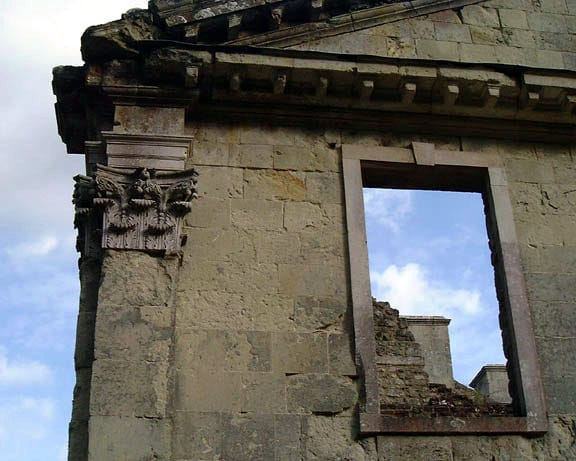
Portland stone, Corinthian elegance, sweeping lawns and landscaped grounds, transformed Appuldurcombe into one of the finest houses on the Isle of Wight.
Visitors admired its architectural magnificence; its grand entrance hall, its fabulous art collections; and its commanding position overlooking the downs, the skyline decorated with mock castles and a towering obelisk.
Appuldurcombe was the seat of the Worsleys. Its stone declared permanence; its architecture proclaimed that this family belonged to history.
The illusion proved fragile.
Misfortune repeatedly visited the family. Children died young and successions became complicated. Fortunes fluctuated; and expensive building projects drained resources. The family's influence gradually waned.
Time Has Other Plans
Then came the scandal that made Appuldurcombe famous far beyond the Isle of Wight. Sir Richard Worsley's marriage to Lady Seymour Worsley spectacularly collapsed in one of Georgian Britain's most sensational court cases. Newspapers revelled in every detail.
Society laughed where once it had admired.
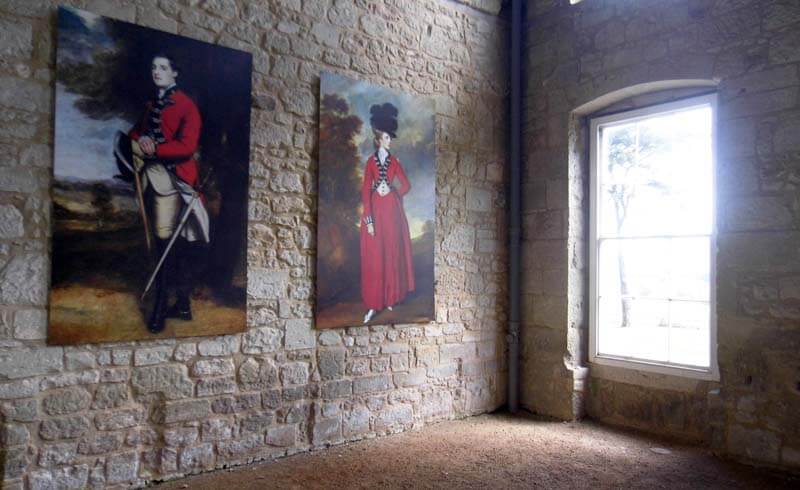
The house built to display prestige became associated instead with humiliation. The Worsleys could not control public opinion nor the stories people chose to tell.
House of Ghosts
Even then Appuldurcombe survived. The greatest damage came later.
During the Second World War the empty house was severely damaged by an explosion. Roofs collapsed, rooms were opened to the sky. One of the Island's grandest houses became the romantic ruin visitors know today.
Stone proved less permanent than its builders imagined.
Visitors now come for reasons the Worsleys could scarcely have imagined. Some admire the architecture; some to imagine how life was lived inside its grand rooms.
Some arrive hoping to encounter ghosts. Tradition speaks of a Grey Lady moving silently through the ruined rooms. Appuldurcombe's hidden tunnels and underground chambers have acquired folklore tales of ghostly footsteps and voices.
Whether these experiences represent paranormal phenomena or the imagination responding to a profoundly atmospheric place remains an open question.
Perhaps the most remarkable haunting is not supernatural at all. It is historical.
 Nick Hammond
The Things We Can and Cannot Keep
The Worsleys lost almost everything they built. Their political influence vanished and their wealth diminished. Their magnificent house became a ruin. Even their carefully planned legacy dissolved beneath the changing centuries.
Yet one thing endured: their story. They could not prevent history from remembering their downfall.
Visitors who know nothing of 18th century politics still speak the name Appuldurcombe and remember Lady Seymour's colourful life. And wonder about the Grey Lady.
Visitors enter its roofless rooms imagining how the drama of those historical figures unfolded and expressed itself in the everyday of life within Appuldurcombe's walls.
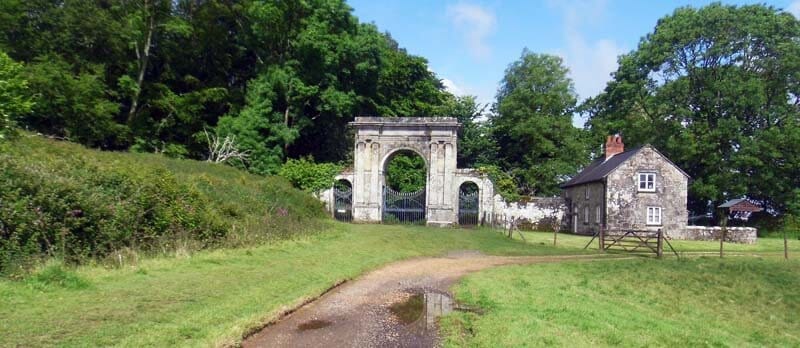
Outside, people pass freely through the triumphal Freemantle Gate, once the ceremonial entrance to the Worsley estate.
Perhaps that is why the ruin affects us so deeply. It reminds us that every generation builds as though permanence were possible.
Time patiently demonstrates otherwise.
A Different Kind of Immortality
History defeats us all, unless time isn't as simple as we imagine. The conventional folklore interpretation is that the Grey Lady is the spirit of a former occupant.
But maybe she is not dead at all.
Everything the Worsleys tried to preserve is decayed or gone, with one curious exception. Witnesses who describe the Grey Lady do not usually encounter her in the context of a ruin; they describe her in rooms that no longer exist.
The library appears furnished, walls and floors still stand; its windows are glazed, the house is whole. If these accounts are accurate they present a paradox: the Worsleys failed to preserve Appuldurcombe, yet someone - or something - appears still to inhabit it.
Not the ruin, the house. Folklore interprets her as a ghost. Another possibility is that she is simply still there.
If Appuldurcombe sometimes slips into another moment, then witnesses are not seeing a ghost wandering through today's ruins. They are seeing a woman walking through a perfectly intact library, while we happen to glimpse her from our side of time.
We think we see a ghost inhabiting our world, when in fact we are intruding into hers.
Maybe every generation leaves two Appuldurcombes behind. One belongs to archaeology, the other to memory. The archaeological Appuldurcombe is easy to visit. It is roofless, broken and weather-lashed. Its greatness exists only in guide books and engravings.
The remembered Appuldurcombe is different. It survives in paintings, diaries, letters, family recollections; folklore and perhaps the occasional unexplained experience.
One house has collapsed. The other remains surprisingly intact.
The Grey Lady's World of Now and Then
If the Grey Lady tradition contains even the smallest grain of truth then the irony of Appuldurcombe is that the Worsleys spent centuries trying to preserve their house in stone. Stone failed them.
Yet one member of the family may have achieved a very different kind of permanence simply by continuing to inhabit the moment in which Appuldurcombe was complete; never quite leaving her own time.
The Worsleys sought immortality in the ways people always have: through descendants, through monuments; through architecture and through the hope that future generations would remember their achievements. Time defeated each of them.
The Grey Lady legend imagines another possibility.
If she is not a ghost but a glimpse across time, then she has escaped chronology. Somewhere beyond our present Appuldurcombe has not fallen, and she has never left. The Grey Lady still exists in the moment to which she belongs.
She has, in a sense, stepped sideways out of history.
Her immortality reveals our deep human longing. Across cultures, people have always searched for ways to overcome time; some sought fame and monuments. The Grey Lady legend imagines a different answer.
Ultimately the Worsleys achieved a kind of immortality which had nothing to do with influence and great wealth, or the architecture they laboured to preserve.
They survived because their story refuses to disappear.
The rise and fall of Appuldurcombe House ultimately becomes one of humanity's oldest questions: What, if anything, escapes time?
 Nick Hammond