Margo and Walter Williams believed they had uncovered evidence that human personality can survive bodily death. Whether they were correct remains one of the central questions this archive invites readers to consider.
A Focus of Psychical Research
From the 1970s, Isle of Wight clairaudient investigator Margo Williams compiled one of Britain's most unusual collections of paranormal case material.
This digital archive preserves those investigations and explores them with an open but critical mind.
The trend in psychical research generally has moved away from its early focus on life after death, to quantitative analysis of psychic abilities generated in laboratory tests.
Margo Williams' work returned to its pioneers' preoccupation – the afterlife.
Because such claims cannot readily be reproduced under laboratory conditions, reports of so-called "drop-in communicators" have long attracted attention within psychical research, where investigators have attempted to evaluate them using historical verification rather than laboratory experiment.
Who Was Margo Williams
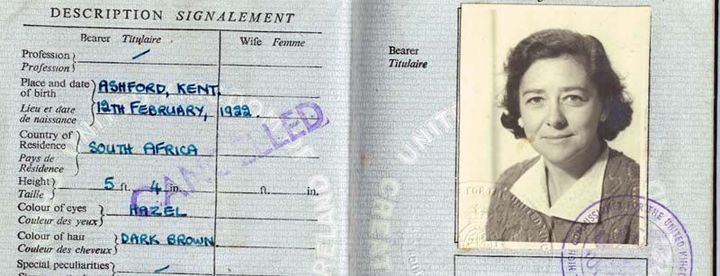
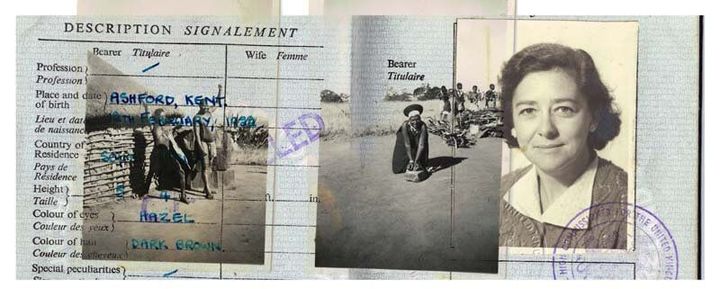
Born in 1922 in the county of Kent in the UK, Margo left school at 14 for work as a London office clerk, then telephone exchange operator in central London during World War Two.
Post war, she and Walter emigrated to South Africa where she worked as laboratory assistant; discovered an exceptionally complete fossil of the dolphin-like marine reptile Icthyosaurus on Noordhoek beach in 1952, later displayed as an exhibit in the Iziko South African Museum.
During the early 1970s Margo and her scientist husband Walter returned to the UK and settled in the south coastal town of Ventnor on the Isle of Wight.
Since childhood she had experienced extra sensory abilities. But in her 50s following a period during which her senses of taste and smell were disrupted for many months, she claimed to have heard a ghost in her own home recite a lengthy poem detailing her life in the 1800s, and of how she participated in a homicide.
Sceptical, husband Walter researched the historical clues contained within the poem believing she was experiencing an entirely natural neurological or psychological condition.
Surprised by the accuracy and inaccessibility of detail, he wondered how his uneducated housewife knew that information.
More surprises followed.
What Makes This Archive Unique?
During the months that followed over thirty different "drop-in" communicators spoke to Margo.
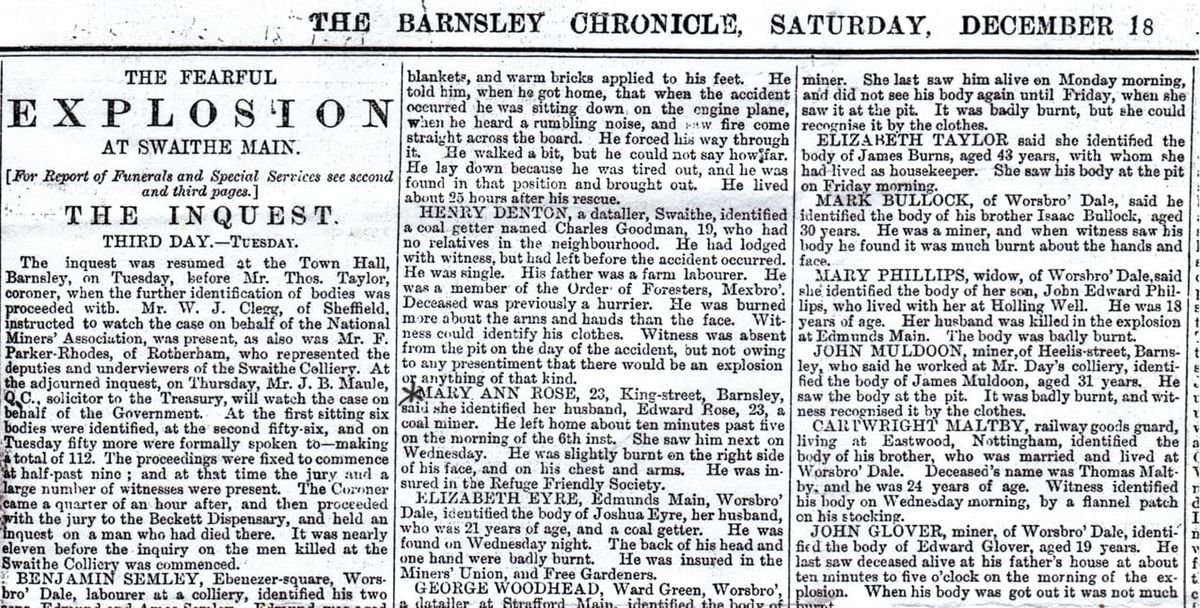
Walter Williams devoted years to examining every script, searching newspapers, archives, libraries and official records in an effort to establish whether the communicators described real historical individuals. He managed to establish full identities for 14 of them.
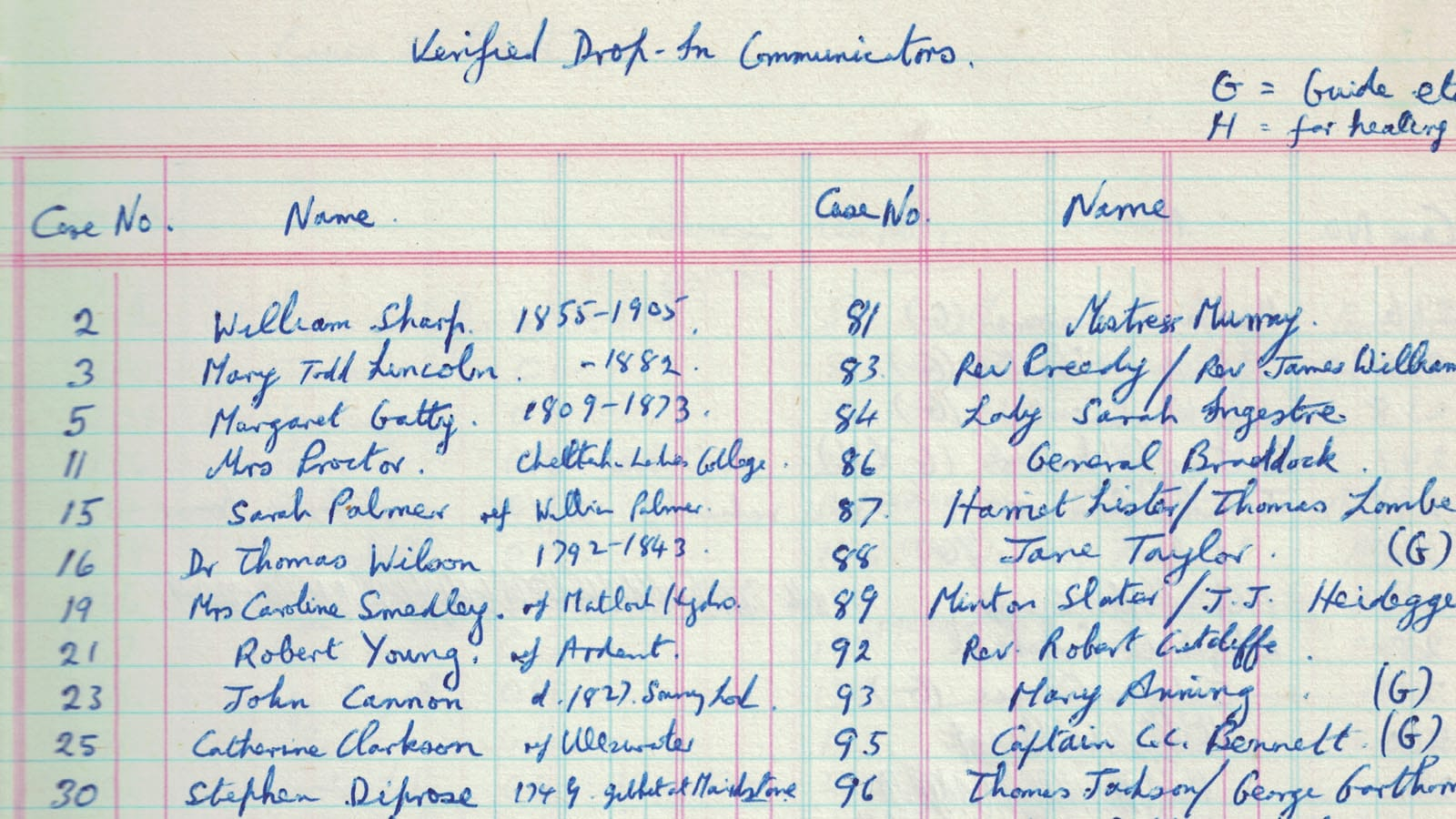
At least eight of the communicants had died overseas; they were from all walks of life, from a humble scullery maid to the wife of an American president.
They also were of widely differing branches of religion. The majority dated from the 19th century but some were from earlier periods.
In total there were nearly 600 scripts, about 60,000 words.
Walter's investigations were global, contacting media, libraries and archives across the UK and the wider world. The breadth of his historical research attracted growing media interest, including the BBC's World at One Programme and an invitation to present their evidence at the Parascience Conferences in London during September 1977 and 1978.
The couple attracted the special interest of senior members of the parapsychology departments at Edinburgh University and the University of Virginia.
In a paper published in the Journal of the Society for Psychical Research, two leading researchers concluded that the information presented by the Williamses could be explained without invoking communication from the dead.
The Williamses strongly disputed those conclusions.
The Wilfion Scripts
A purported paranormal experience at an Isle of Wight historic building, Appuldurcombe House set Margo on the course for which most people knew her on the Isle of Wight – ghost rescue and lost object recovery, and author.
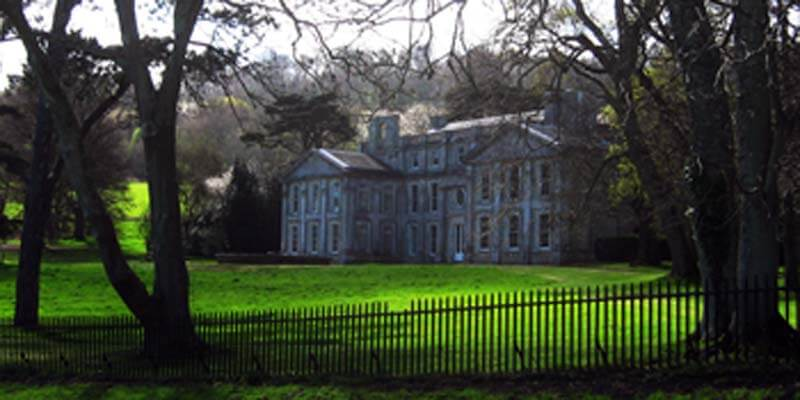
Her drop-in communicator work continued to feature in news and interviews. An anthology of poetry titled Wilfion Scripts was published. This featured the claimed dictated poetry of a Victorian Scottish poet, William Sharp who, when alive, wrote under the shared personality of Fiona Macleod.
The Williamses claimed the poet grumbled and chewed out poetry from beyond the veil of death; now free of Fiona, so he asserted in verse. 'Not his finest work,' complained an Isle of Wight critic; but Harvard scholar Konraed Hopkins considered the project sufficiently worthwhile to support publication.
A Moment in Time of the Williamses
A snapshot of the Williamses in 1981 described a 'normal' household couple: Margo the housewife, cook and cleaner; ready with meal every night. A regular watcher of TV soap drama Coronation Street, and active member of the local community organisation, the Townswomen's Guild.
Walter mostly was busy among the piles of archived scripts; searching for clues, researching names; writing letters. Joining in with team digs around haunted ground for lost mementoes among the willing helpers out on “rescues", or releases of ghosts.
The Williamses' home contained collections of fossils, minerals, shells and potted desert plants.
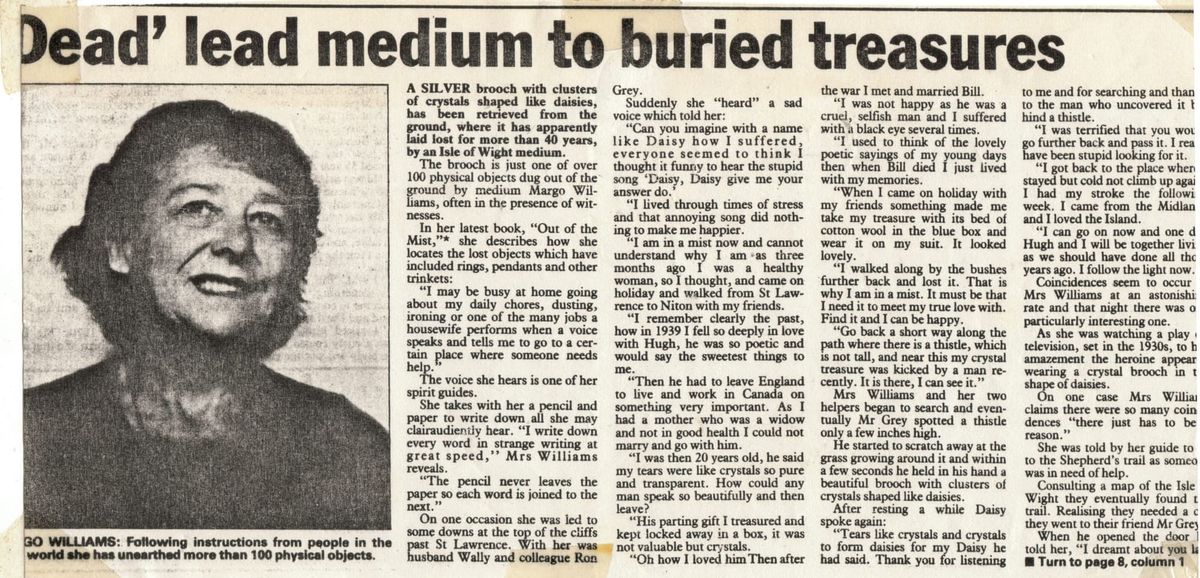
Of most interest to the media was the large collection of objects, like a lost-property trove. Rings, brooches, coins and all manner of seemingly random accessories and collectibles recovered, so the Williamses claimed, on the direction of ghosts who lost them when alive.
Earthbound. Rescue and Release
While the drop-in communicants' testimonies were not so widely known to the general public, more the focus of academic investigation, most people knew Margo as the woman who came to haunted houses.
Margo described how some communicants returned often to direct the Williamses to places where other individual discarnate entities seemed held captive in time, bound to lost objects. What we would call ghosts in hauntings.
The total of out-on-site cases continued to rise. Media news reported how during most fine weather days, Margo and Walter were busily engaged in what a reporter described as "rescue work.”
“They are earth-bound spirits (I prefer not to use the word 'ghosts') who cannot break free from their earthly experiences," wrote the Islander interviewer during summer of 1981.
Interviewers and article writers, parapsychology authors and investigators accompanied the Williamses for on-site studies. Media exposure resulted in calls from householders and business-owners on the Isle of Wight who believed themselves victims of ghosts and poltergeist activity.
Margo's investigations suggested a surprisingly complex picture, with communicators, hauntings and so-called "earthbound" personalities appearing to play different roles within the experiences she reported.
The Williamses made no appreciable financial gain from their rescue services, only the cost of transport. "Sometimes we get a bag of apples," said Walter.
Asked about the effectiveness of her work, Margo told the News of the World that she believed around 90% of investigations resulted in successful releases.
 Nick Hammond
The Archive Today
The archive touches large questions: is there personality survival after death? How powerful is human memory and identity?
What does this tell us about consciousness, and our relationship with time?
Decades after the original investigations, these questions remain unresolved. Were the communicators genuine surviving personalities or products of Margo's unconscious creativity? Were they expressions of memory embedded within places; or do they point toward a reality not yet understood?
The purpose of this archive is to preserve the evidence and invite thoughtful exploration, not to impose answers.
Whether future readers interpret the material as evidence for survival after death, an extraordinary expression of the unconscious mind, or an important chapter in Britain's paranormal history, the archive preserves a remarkable record of investigations that might otherwise have been lost.
Continue the Investigation
 Nick Hammond